Cinema has long been fascinated with the figure of the artist—not simply as a creator, but as a vessel of obsession, suffering, transcendence, and contradiction. These films operate as more than mere chronological biographies; they are cinematic mirrors held up to the act of creation, translating the static, tactile world of the canvas into a medium defined by time, motion, and light. From the tortured hagiographies of the mid-century to more contemporary, deconstructed portraits, the artist on screen becomes a bridge between the visceral struggle of the studio and the ethereal beauty of the finished masterpiece, often reflecting the director’s own anxieties about the permanence of their art.
The relationship between the paintbrush and the lens has always been a volatile romance, a symbiotic exchange where the camera seeks to decode the alchemy of inspiration. Whether it is the frenetic “mad genius” archetype—defined by manic brushstrokes and absinthe-soaked delirium—or the meditative, domestic stillness of a Dutch interior, cinema remains obsessed with the physical labor of the craft. We are looking back at the definitive films that captured the spirit of the greats and the attempt to render the internal life of the painter as vivid as the canvases they left behind.
1. Andrei Rublev (1966)
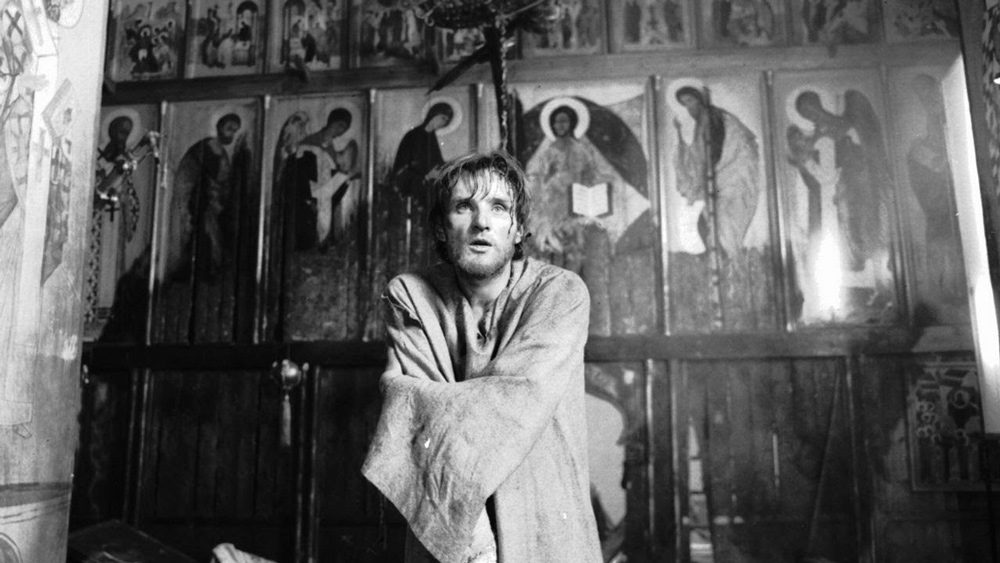
Andrei Tarkovsky’s monumental masterpiece is less a traditional biography and more a spiritual odyssey concerning the endurance required to create in a fractured, violent world. This sprawling, black-and-white epic follows the 15th-century iconographer through a series of harrowing vignettes that capture the grim reality of medieval Russia, from the carnal chaos of pagan midsummer festivals to the bone-chilling brutality of Tatar raids. For the vast majority of its three-hour runtime, Tarkovsky deliberately keeps Rublev’s actual artwork off-camera, focusing instead on the silence, the mud, and the moral crises of a man who eventually takes a vow of silence in response to the world’s cruelty. The film culminates in the legendary “Bell” sequence—a metaphor for the terrifying leap of faith inherent in all art—before finally erupting into a breathtaking Technicolor finale. In these closing moments, the camera pans across the actual, weathered icons of the real Andrei Rublev, suggesting that while the artist perishes, the transcendent beauty of the work remains.
2. Lust for Life (1956)
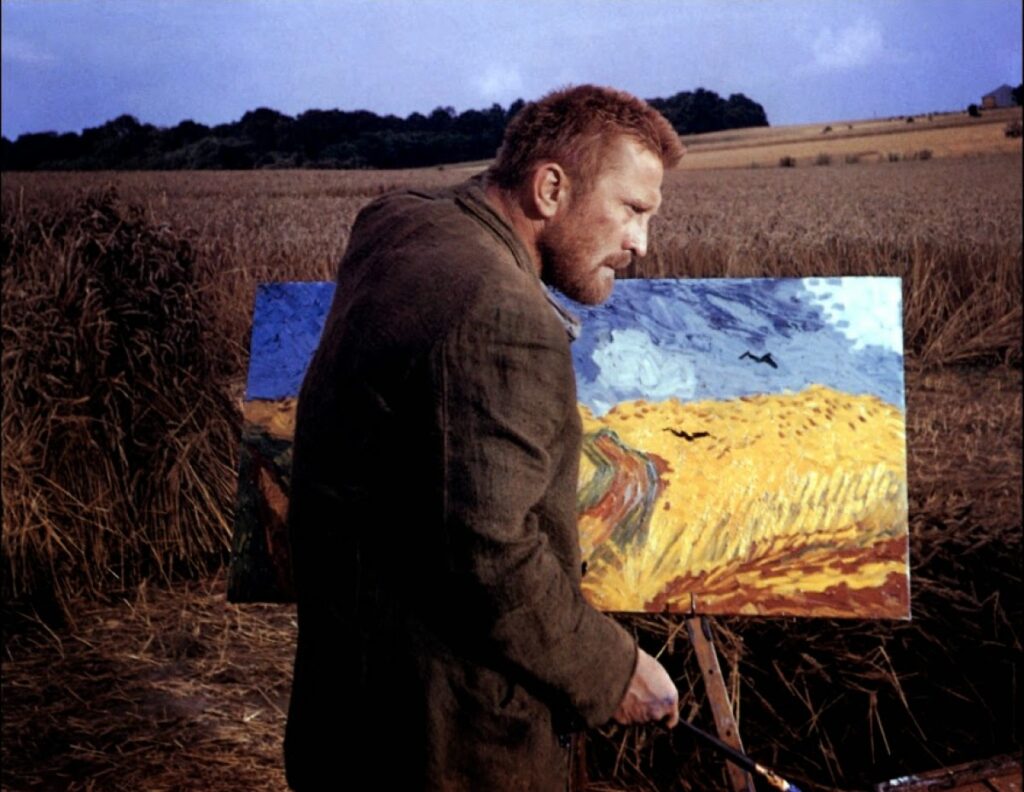
In one of the most physically and emotionally committed performances of the 1950s, Kirk Douglas practically inhabited the sun-drenched, ear-severing intensity of Vincent van Gogh. Directed by Vincente Minnelli, a filmmaker celebrated for his sophisticated use of color, this film remains a vibrant exploration of artistic torment that avoids the flatness of typical biopics. Minnelli utilized an anamorphic widescreen format and shot on location in Arles and the Auvers-sur-Oise asylum to replicate the exact light and landscapes that inspired Van Gogh’s most famous canvases. The narrative is driven by the electric, often toxic friction between Douglas’s volatile Vincent and Anthony Quinn’s earthy, arrogant Paul Gauguin. While it helped cement the “tortured genius” trope in the public imagination, the film’s aesthetic reverence for the act of painting—treating the canvas as a battlefield of thick impasto and clashing hues—elevates it into a genuine work of art in its own right.
3. Frida (2002)
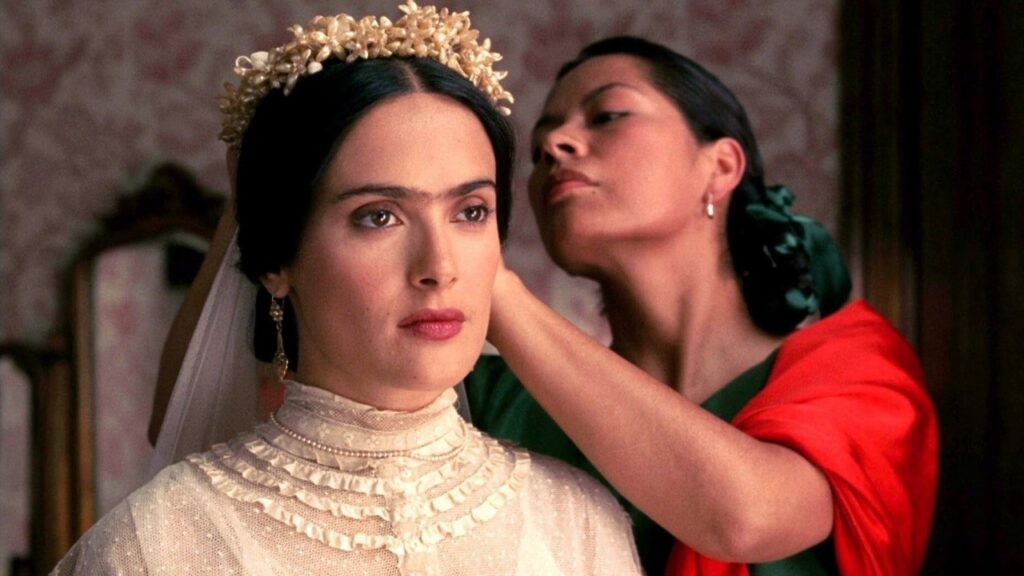
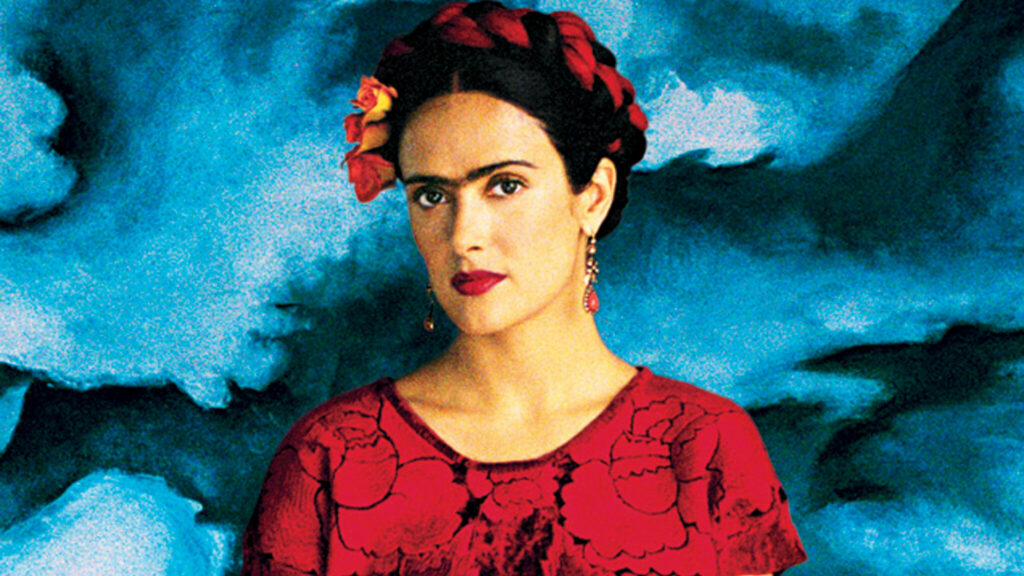
Salma Hayek’s long-gestating passion project brought Frida Kahlo’s surrealist internal world to life through a brilliant synthesis of history and visual effects. Director Julie Taymor, drawing on her extensive background in avant-garde theater, ensured the film felt as textured and defiant as Kahlo’s own canvases by utilizing “tableau vivant” sequences where the paintings literally come to life. The film explores how Kahlo’s chronic physical pain and her tempestuous, often agonizing marriage to Diego Rivera served as the primary engines for her creativity. Beyond the personal drama, Taymor captures the radical political energy of 20th-century Mexico, populating the screen with a rich palette of marigolds, blood-reds, and deep teals. It is a film that treats Kahlo’s life not as a tragedy to be pitied, but as a masterpiece of self-invention, where every scar and betrayal is eventually transmuted into a hauntingly beautiful self-portrait.
4. La Belle Noiseuse (1991)
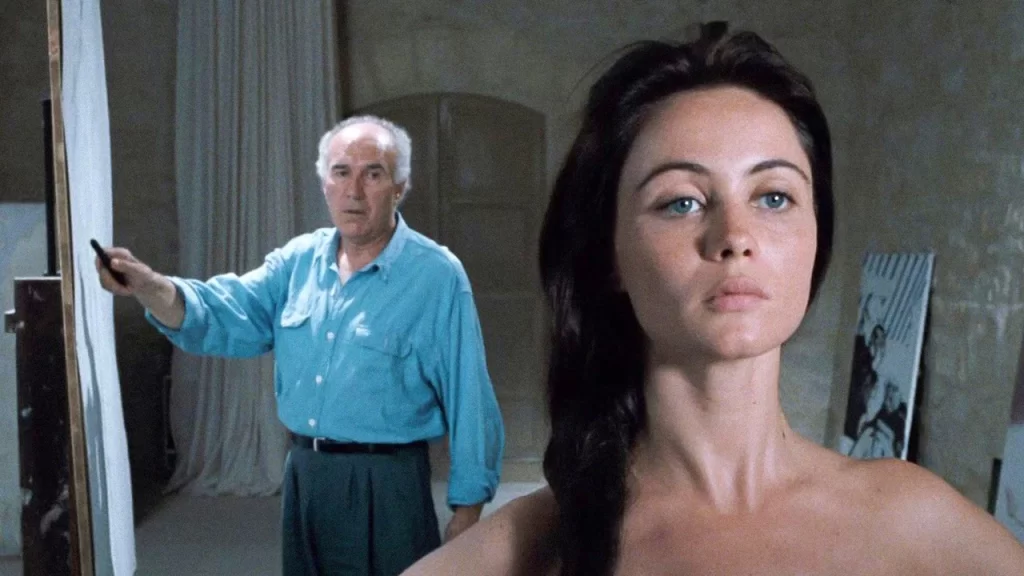
For those who want to experience the sheer labor of creation, Jacques Rivette’s four-hour “slow burn” stands as the ultimate “studio” film. It tracks the agonizingly slow rebirth of a long-abandoned masterpiece, The Beautiful Troublemaker, focusing on the psychological and creative friction between an aging, cynical painter played by Michel Piccoli and his new muse, portrayed by Emmanuelle Béart. Rivette eschews the standard “montage of inspiration” in favor of real-time sequences that focus on the tactile reality of the craft. The audience hears every scratch of the pen on paper and sees every smudge of charcoal as the artist struggles to capture the essence of his subject. The hands seen sketching in the film actually belong to the French artist Bernard Dufour, providing a level of technical authenticity rarely matched in cinema. It is a demanding, hypnotic experience that strips away the romance of art to reveal the grueling, often invasive process of chasing perfection.
5. Caravaggio (1986)
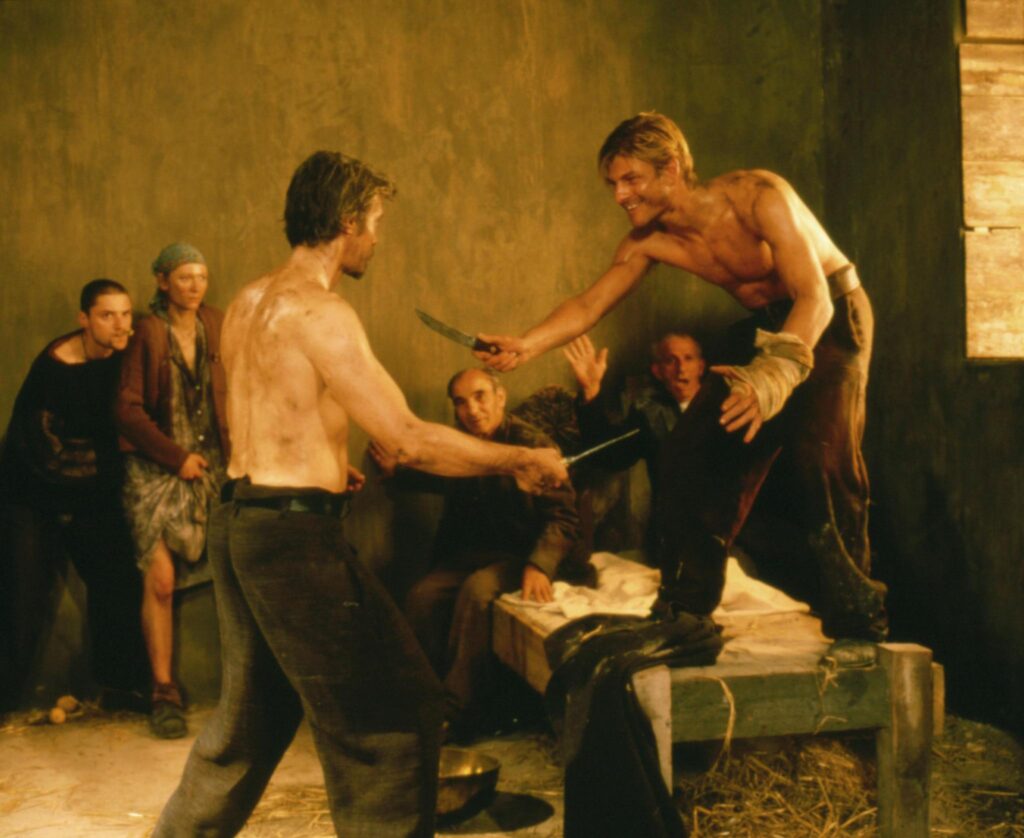
Derek Jarman brought a queer, radical, and visually arresting eye to the life of the Baroque era’s most notorious “bad boy.” Rather than a stiff period piece, Jarman created a “theatre of the mind,” using intentionally jarring anachronisms—like characters using typewriters or motorbikes—to bridge the gap between 17th-century Rome and the modern avant-garde. The film serves as a masterclass in the very technique Caravaggio pioneered: chiaroscuro. By bathing the sets in deep, velvety shadows and piercing highlights, Jarman transforms the screen into a series of living paintings. Featuring Tilda Swinton in one of her earliest roles, the narrative explores the dangerous triangulation of desire and violence that fueled Caravaggio’s work, suggesting that his revolutionary use of street criminals as models for saints was both a religious provocation and a deeply personal confession.
6. The Curse of Modigliani (2025)
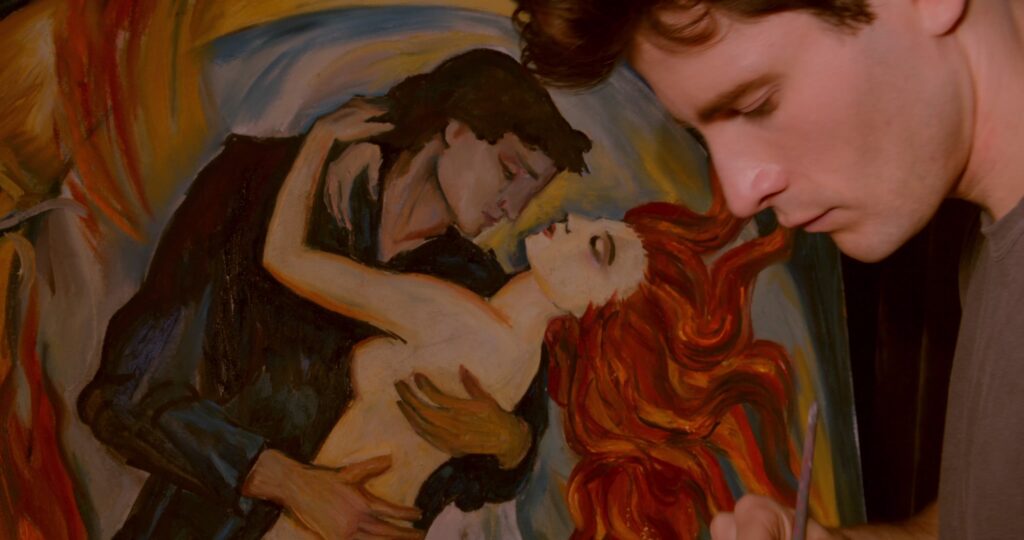
A standout from the recent wave of psychological art dramas, Diana Ringo’s Helsinki-set film avoids the standard traps of the biopic by framing the artist’s life through a modern lens. Instead of a linear history, we follow Edward Pishiyski as a contemporary painter whose discovery of an antique diary begins to blur the lines between his own reality and the tragic, booze-soaked descent of Amedeo Modigliani. The film uses the stark, atmospheric chill of the Finnish capital to mirror the internal isolation of its protagonist. It is a stylish and deeply moody exploration of the “haunted artist” trope, arguing that the true curse isn’t supernatural, but rather the self-fulfilling prophecy of an obsession that demands the artist sacrifice their sanity for their signature style. It remains a hauntingly beautiful reminder that the ghosts of the past are never truly finished with the living.
7. Big Eyes (2014)
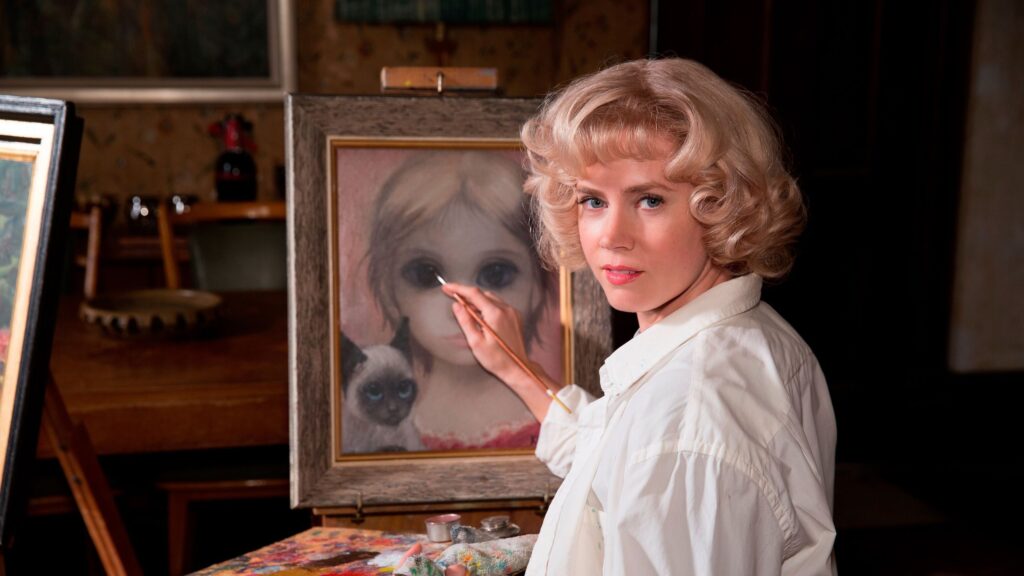
In a rare departure from his signature gothic whimsy, Tim Burton turned his attention to the stranger-than-fiction true story of Margaret Keane. This film provides a fascinating, often infuriating look at the commercialization of art and the mid-century patriarchal structures that allowed Walter Keane to take credit for his wife’s iconic, saucer-eyed paintings. Amy Adams delivers a powerhouse performance of quiet resilience, showing how Margaret’s creative identity was slowly eroded by her husband’s manipulative showmanship. Beyond the legal battle, the film explores the tension between “high art” and popular kitsch, questioning why some work is relegated to the supermarket shelf while others are hung in museums. It serves as a colorful yet sobering reminder that for many artists, the hardest part of the process isn’t the painting itself, but the fight to simply sign their own name to it.
8. Montparnasse 19 (1958)
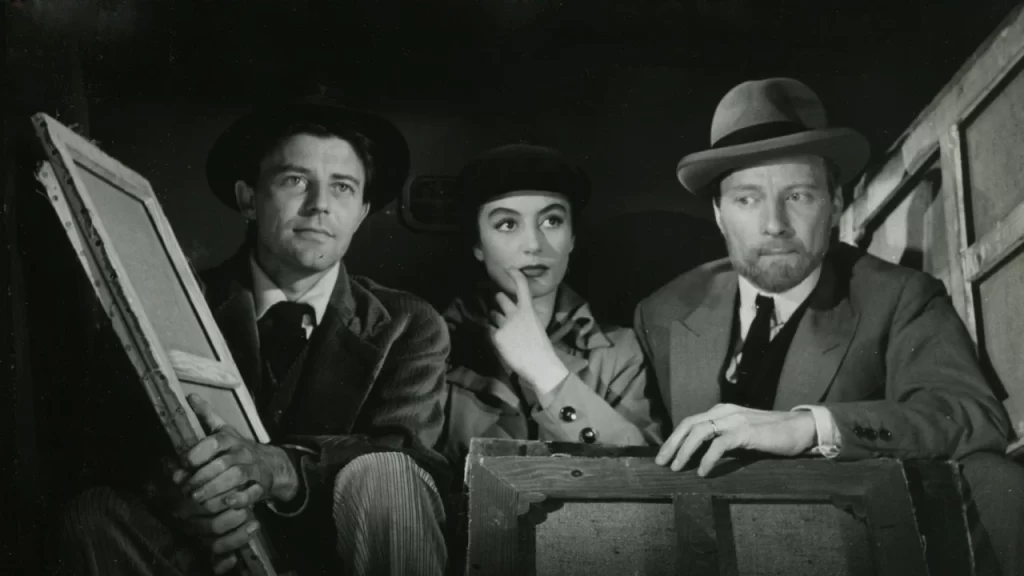
Long before the surreal psychological mirroring of the 2025 “Curse,” Jacques Becker delivered the definitive romanticized tragedy of Amedeo Modigliani’s final days in Paris. Gérard Philipe portrays the artist not just as a painter, but as the archetypal “doomed bohemian,” a man drifting through the smoke-filled cafes of Montparnasse while his health and finances crumble around him. The film captures a very specific post-war cinematic melancholy, focusing on the heartbreaking contrast between Modigliani’s elegant, elongated portraits and the squalid, poverty-stricken reality of his daily existence. It is a haunting look at an artist who was entirely out of step with his time, ignored by the market while alive only to be commodified the moment he took his last breath. Becker’s direction ensures that the tragedy feels intimate and inevitable, painting a portrait of a man who was perhaps too fragile for the very world he sought to immortalize.
9. The Agony and the Ecstasy (1965)
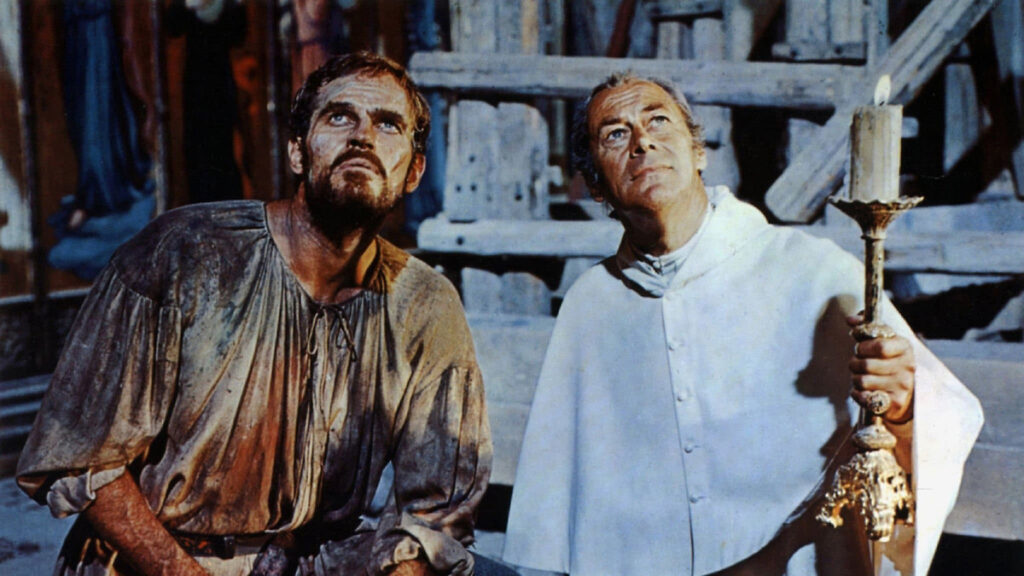
This is the ultimate “studio executive” vision of art history, a wide-screen spectacle that treats the painting of the Sistine Chapel with the same gravity as a military campaign. Charlton Heston brings his signature stoic intensity to Michelangelo, while Rex Harrison provides a formidable foil as the “Warrior Pope” Julius II. Their relationship is the heart of the film—a constant, thunderous clash between secular genius and divine authority. While it leans into the grandeur of 1960s Hollywood, the film is surprisingly effective at communicating the sheer, back-breaking labor of the Renaissance. We see Michelangelo suspended in the air for years, blinded by dripping plaster and exhausted by the scale of his own ambition. It is a loud, colorful, and deeply earnest tribute to the idea that great art isn’t just inspired; it is built through raw physical grit and the stubborn refusal to compromise with even the highest powers on Earth.
10. Little Ashes (2008)
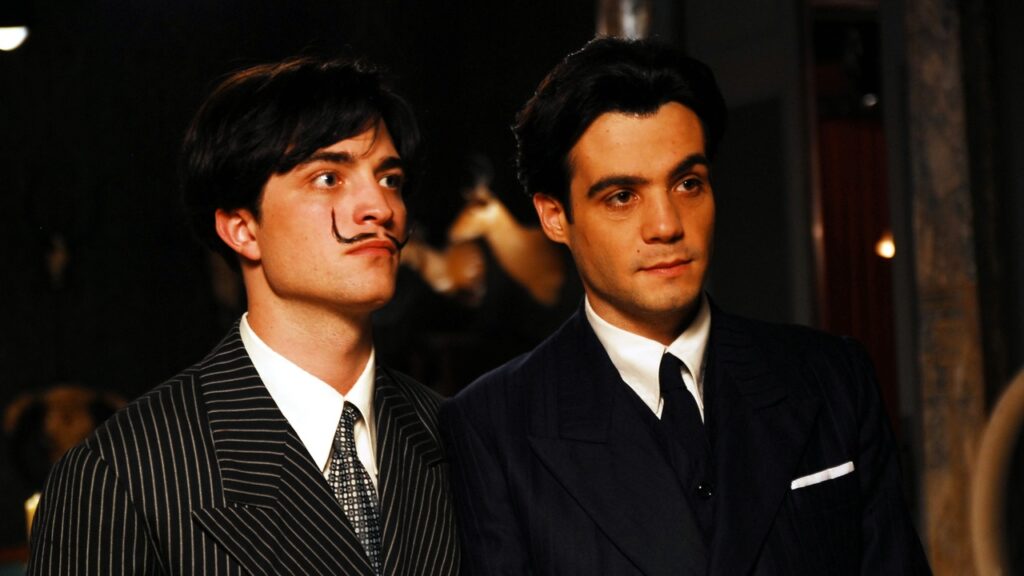
Years before he would step into the shadows of Gotham, Robert Pattinson took a fearless dive into the flamboyant eccentricities of a young Salvador Dalí. Set against the backdrop of 1920s Madrid at the Residencia de Estudiantes, the film explores the volatile and deeply repressed creative triangle between Dalí, the burgeoning filmmaker Luis Buñuel, and the sensitive poet Federico García Lorca. Pattinson captures Dalí’s transition from a shy, awkward student into the waxed-mustache provocateur the world would eventually know, highlighting how his public persona was often a shield for his private insecurities. The narrative hums with the tension of “the new,” showing how these three icons pushed one another toward the boundaries of Surrealism. It is a film about the dangerous friction of youth and the specific, aching heartbreak that occurs when artistic ideologies begin to pull a group of friends in different, often conflicting, directions.
11. Goya or the Hard Way to Enlightenment (1971)
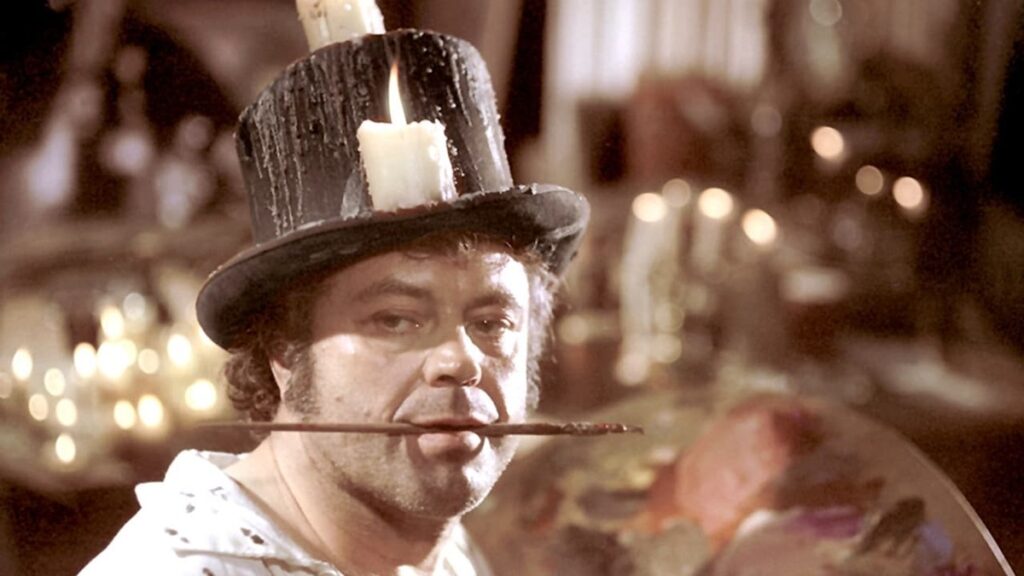
Produced in the former East Germany, this heavy-hitting epic offers a rigorous look at Francisco Goya’s profound transformation from a pampered royal court painter to a deaf, disillusioned visionary. The film treats Goya’s life as a journey through the “hard way” mentioned in the title—a slow awakening to the horrors of war and the corruption of the Spanish Inquisition. As Goya’s hearing fades, the film’s visual language shifts, moving from the bright, stiff elegance of his early portraits to the muddy, nightmarish textures of his later “Black Paintings.” It is a rare cinematic deep dive into how political turmoil and personal suffering can fundamentally rewire an artist’s soul. By the end, the film suggests that Goya didn’t just paint the world; he bore witness to its collapse, turning his canvases into a mirror for a society that had lost its way in the darkness.
12. Chagall — Malevich (2014)
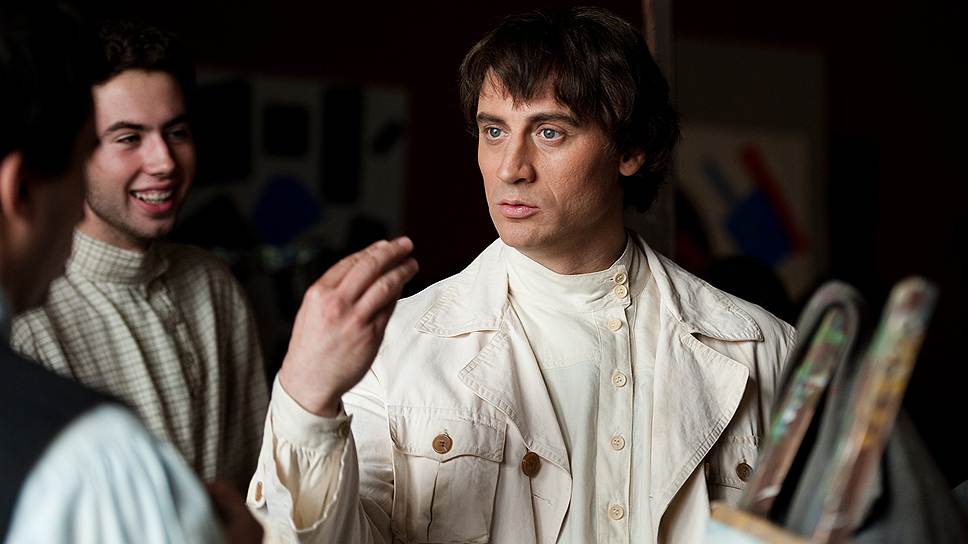
This vibrant Russian production dramatizes one of the most fascinating intellectual showdowns in art history: the ideological war between Marc Chagall (Leonid Bichevin) and Kazimir Malevich (Anatoliy Beliy). Set in the wake of the Russian Revolution at the Vitebsk People’s Art School, the film pits Chagall’s whimsical, folkloric world of flying lovers and colorful villages against Malevich’s stark, uncompromising Suprematism. It treats the “clash of the canvas” as high drama, showing how Malevich’s belief in the “Black Square” as the ultimate expression of the new world threatened to erase Chagall’s more humanistic, nostalgic vision. Anatoliy Beliy—an actor widely recognized for his commanding screen presence in projects like KARAntin and Two Prosecutors—delivers a sharp, almost architectural performance as Malevich. Director Alexander Mitta uses a playful, almost theatrical style to bring Chagall’s dreams to life, contrasting them with the sharp, geometric rigidity of Malevich’s revolutionary fervor. It is a brilliant exploration of the idea that art is never just “decoration”—it is a battlefield where different visions of the future fight for dominance.
13. Mr. Turner (2014)
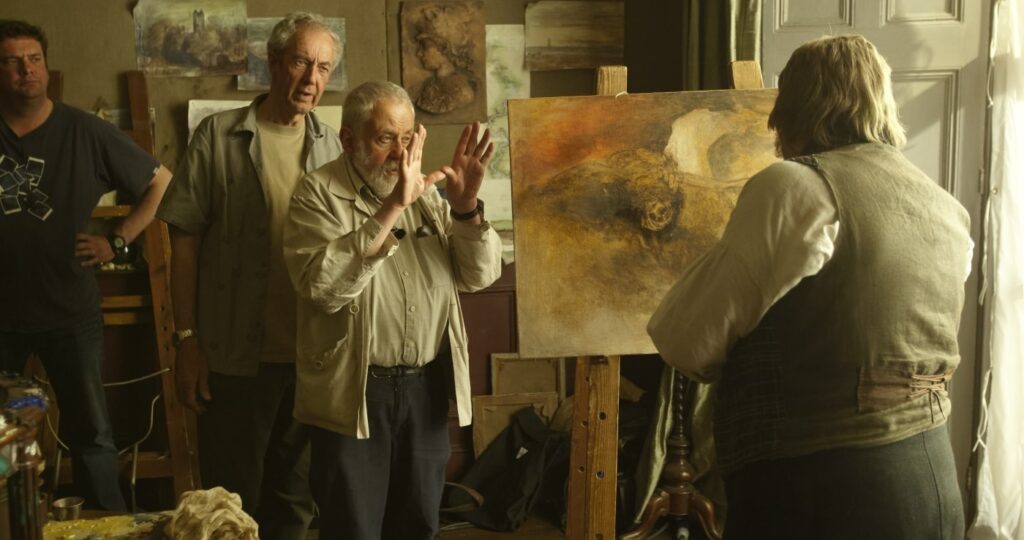
Mike Leigh’s Mr. Turner is about the sheer, grunting physicality of observation. Timothy Spall delivers a career-defining performance as J.M.W. Turner, portraying the “painter of light” not as a refined gentleman, but as a gargling, eccentric force of nature who literally straps himself to the mast of a ship to understand a storm. The film’s cinematography by Dick Pope is a miracle in itself, as it manages to translate Turner’s transition from classical landscapes to his near-abstract late works into a digital format that feels as textured as oil on canvas. It’s a film that celebrates the sensory world—the smell of the sea, the grit of the pigment, and the social awkwardness of a man who could see the sublime in a sunset but struggled to navigate a drawing room.
14. Edvard Munch (1974)
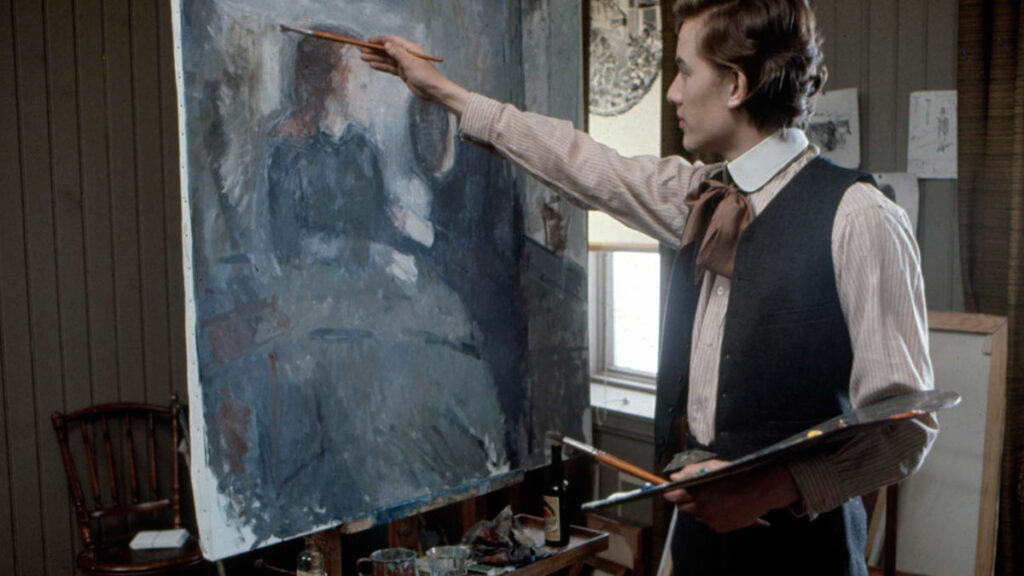
Directed by Peter Watkins, this film is widely considered one of the greatest artist biopics ever made. Eschewing the polished, sentimental tropes of Hollywood, Watkins employs a groundbreaking docudrama style—frequently using handheld cameras and having actors address the lens directly—to create a sense of raw, immediate historical reality. The film tracks Munch’s early life in Kristiania (now Oslo), focusing on the profound personal losses and the rigid, suffocating social morality that fueled his eventual transition into Expressionism. By treating the artist’s memories as fragmented, haunting flashbacks, the film mirrors the psychological disorientation inherent in works like The Scream or The Sick Child. It is a cold, meticulous, and deeply affecting masterpiece that frames Munch’s art not as a product of “genius,” but as a desperate, necessary tool for surviving the trauma of existence.
15. Moulin Rouge (1952)
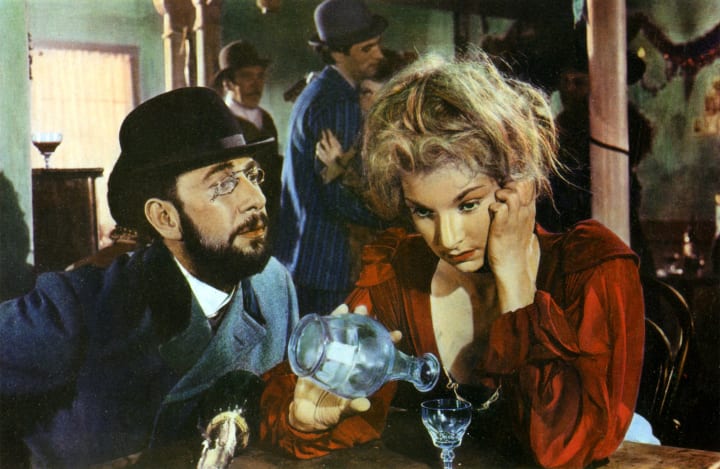
John Huston’s 1952 Academy Award-winning adaptation of Pierre La Mure’s novel is less a conventional biopic and more a melancholic meditation on the isolation of the artistic spirit amidst the kaleidoscopic chaos of Fin de Siècle Paris. This vivid, texture-heavy drama features a tour-de-force performance by José Ferrer, who utilized grueling physical restraints and concealed pits to portray the diminutive Henri de Toulouse-Lautrec alongside a cast featuring Zsa Zsa Gabor as Jane Avril and Colette Marchand as the volatile Marie Charlet. The narrative follows the artist through the absinthe-drenched shadows of Montmartre, capturing a world of garish can-can dancers and desperate street walkers that exists just outside the reach of his own profound loneliness. For much of its duration, the film dwells on the technical and emotional friction of Lautrec’s existence, brought to life by cinematographer Oswald Morris, who famously employed revolutionary Technicolor techniques—using smoky filters and a muted palette—to mimic the sharp, expressive lines of the artist’s own lithographs. This transformation of the screen into a living canvas builds toward a poignant, spectral finale where the phantoms of the Moulin Rouge parade through the dying artist’s consciousness in a final, ghostly ballet.