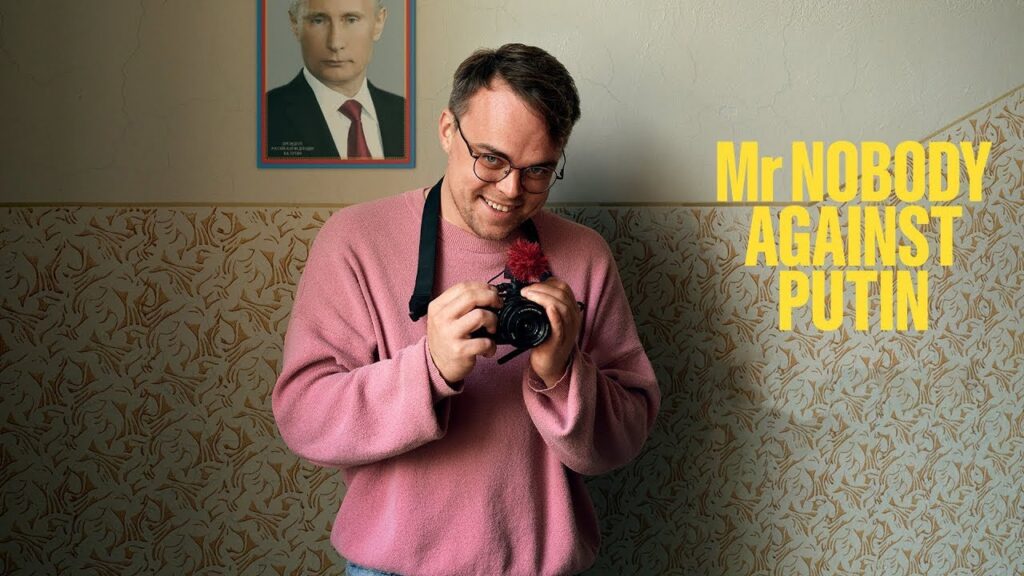
At first glance, Mr. Nobody Against Putin appears deceptively simple: a quiet chronicle of a Russian school in Karabash, children going about their day, and a teacher—or, more accurately, a videographer—filming classrooms. But the simplicity is misleading, beneath the surface, the film is a labyrinth of unanswered questions, gaps in authorship, and puzzling editorial decisions. Mr. Nobody Against Putin presents itself as a modest chronicle of life inside a provincial Russian school, yet the more closely one looks, the more elusive—and arguably constructed—it begins to feel.
On the surface, the film follows a seemingly ordinary environment: classrooms, children, routine interactions, and the slow seep of wartime rhetoric into education. But this apparent simplicity raises uncomfortable questions rather than delivering clarity. The figure of co-director of the film Bronstein is particularly puzzling—basic facts like a date of birth are absent, and the claim that he spent a decade in China producing a previous film sounds less like a career trajectory and more like a spy biography. For a film that positions itself within a framework of truth and observation, this lack of transparency undermines its credibility.
The same ambiguity surrounds Pavel Talankin. Who is this ”Mr Nobody“? Presented as a “teacher,” he does not quite fit the definition—he is a videographer embedded in the school in Karabash, not an educator shaping young minds. His prior background remains unclear, which again complicates the film’s claim to authenticity. Who is observing whom, and under what circumstances? The film never answers.
What is perhaps most striking is the mismatch between reputation and content, despite receiving major recognition, including winning an Academy Award and BAFTA—the film itself feels closer to a home video than to rigorous documentary cinema. It gestures toward critique, particularly of the climate in Russian schools during the war in Ukraine, but the critique is surprisingly muted. The ideological pressure that should form the backbone of the narrative is reduced to mild classroom references and television broadcasts.
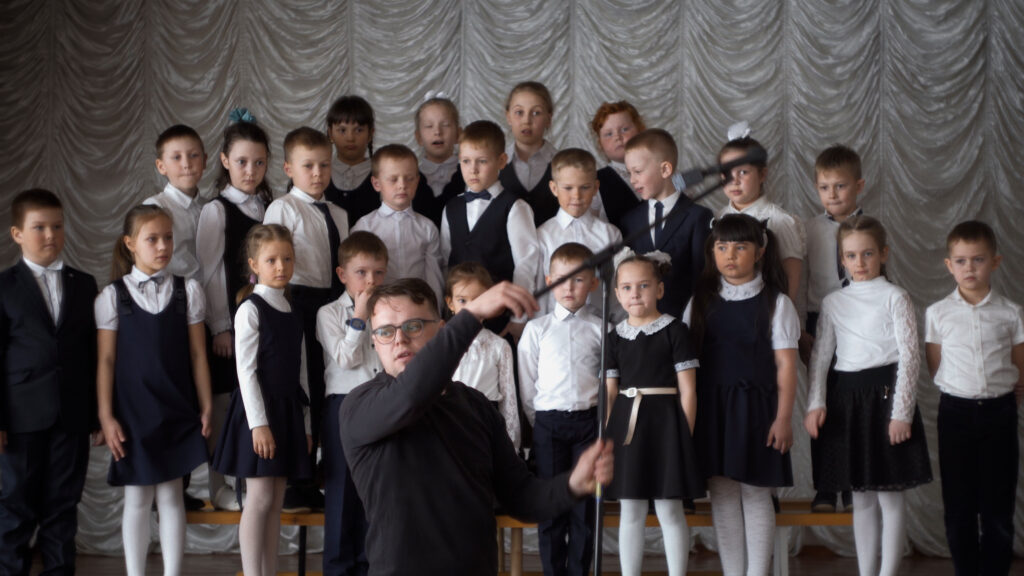
Even more paradoxical is the portrayal of the school environment. Karabash, often described as one of the bleakest industrial towns in Russia, appears here perfectly idyllic—the students are very polite, well-dressed, and emotionally balanced. Their relationship with Talankin is warm, even affectionate, with former students continuing to be friends with him. Rather than exposing systemic harshness or fear, the film presents a strangely harmonious microcosm, in this sense, it unintentionally contradicts its own supposed thesis.The presence of Vladimir Putin is also telling—he appears mostly as a distant figure on screens—serious, mediated, normalized. There is no real confrontation, no deep probing of power structures. Instead of dismantling propaganda, the film risks reproducing its most benign surface—with the film becoming less a powerful indictment than an ambiguous artifact.
The film’s production values reinforce this impression of amateurism. Talankin himself admitted that he did not edit the film; he simply supplied footage. The final product—shaky shots, casual framing, meandering pacing—often resembles a home video more than a polished documentary. And yet, astonishingly, this film received an Oscar. The question of why the Academy would reward such a modest project is central to understanding the work’s meaning. The answer seems to lie not in the craft, but in the mythology surrounding Talankin—presented as a lone observer and “everyman” in a Russian school, he functions as a symbolic figure—a vessel for audiences to project their own ideas of resistance. The obscurity of Bronstein amplifies Talankin’s role, making him the unambiguous face of the narrative, despite contributing minimally to the post-production process. In this sense, the Oscar seems less a recognition of cinematic quality and more a recognition of the narrative surrounding the protagonist: the “Mr. Nobody” who supposedly risks everything to expose subtle propaganda.
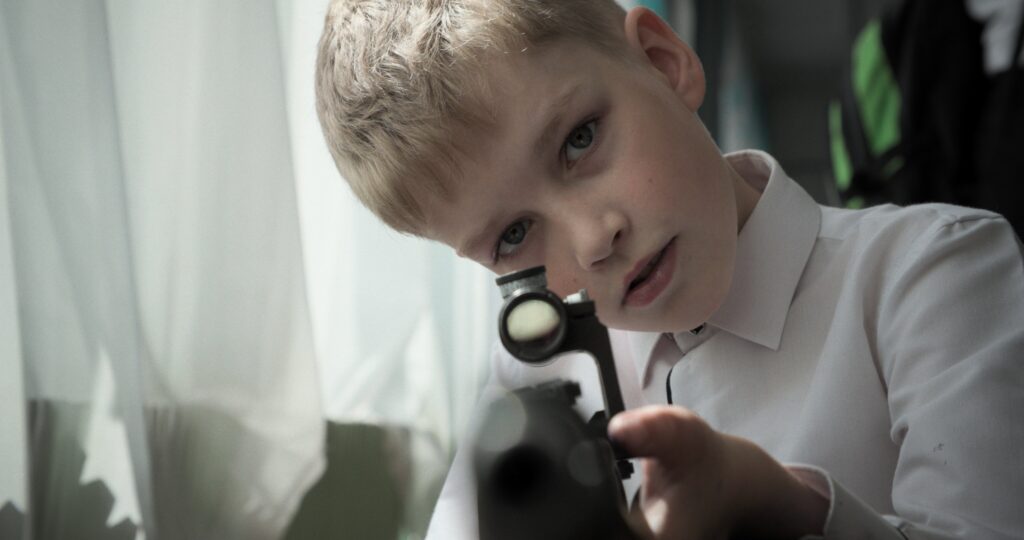
But was there real courage? The film never provides concrete evidence. Talankin casually shows his passport from a distance; we are never told how he intends to cross borders, hide sensitive footage, or navigate the logistical hazards of filming in a politically charged environment. Even his mother, a librarian in the same school, remains safe and employed after the film’s international exposure, and Talankin departs Russia apparently calm about her welfare.
The Oscar may tell us more about the global appetite for certain narratives than about the film itself. Mr. Nobody Against Putin is less a work of documentary truth than a carefully curated illusion: a home-video aesthetic, a mysterious yet charming protagonist, and a celebratory ending all combine to create a story whose power lies in what it suggests, rather than what it shows. The film remains unresolved and profoundly puzzling—an artifact of myth-making as much as of cinema.