• Home
  • Interviews
  • Reviews
  • About
  • Print
  • Contact

Indie Cinema Magazine

Menu
  • Home
  • Interviews
  • Reviews
  • About
  • Print
  • Contact
Home › Film › Reviews › Mr. Nobody Against Putin — A Puzzle of Myth, Ambiguity, and the Oscar

Mr. Nobody Against Putin — A Puzzle of Myth, Ambiguity, and the Oscar

by Günther Kramer


March 25, 2026
   

Mr Nobody Against Putin

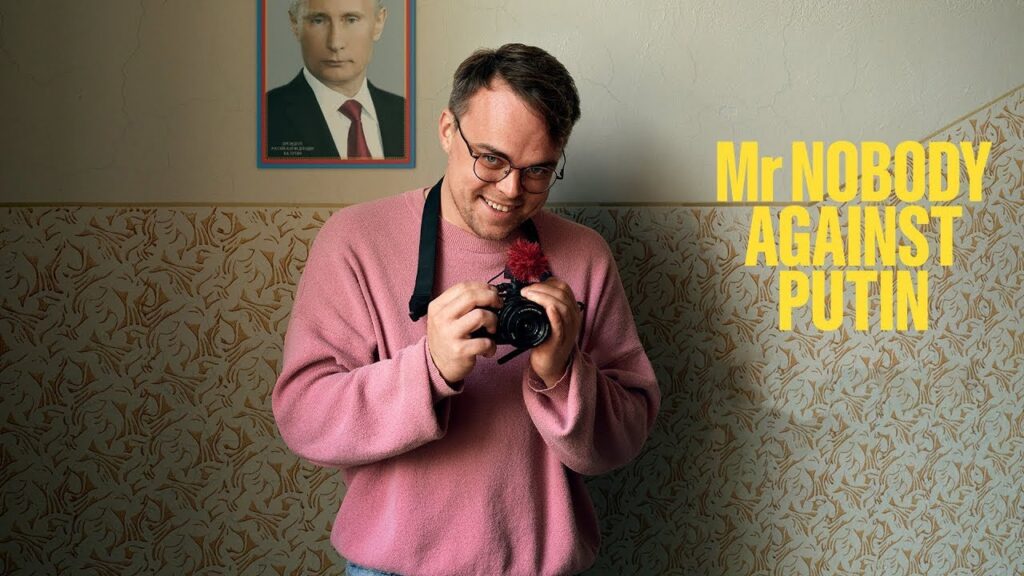
At first glance, Mr. Nobody Against Putin appears deceptively simple: a quiet chronicle of a Russian school in Karabash, children going about their day, and a teacher—or, more accurately, a videographer—filming classrooms. But the simplicity is misleading, beneath the surface, the film is a labyrinth of unanswered questions, gaps in authorship, and puzzling editorial decisions. Mr. Nobody Against Putin presents itself as a modest chronicle of life inside a provincial Russian school, yet the more closely one looks, the more elusive—and arguably constructed—it begins to feel.

On the surface, the film follows a seemingly ordinary environment: classrooms, children, routine interactions, and the slow seep of wartime rhetoric into education. But this apparent simplicity raises uncomfortable questions rather than delivering clarity. The figure of co-director of the film Bronstein is particularly puzzling—basic facts like a date of birth are absent, and the claim that he spent a decade in China producing a previous film sounds less like a career trajectory and more like a spy biography. For a film that positions itself within a framework of truth and observation, this lack of transparency undermines its credibility.

The same ambiguity surrounds Pavel Talankin. Who is this ”Mr Nobody“? Presented as a “teacher,” he does not quite fit the definition—he is a videographer embedded in the school in Karabash, not an educator shaping young minds. His prior background remains unclear, which again complicates the film’s claim to authenticity. Who is observing whom, and under what circumstances? The film never answers.
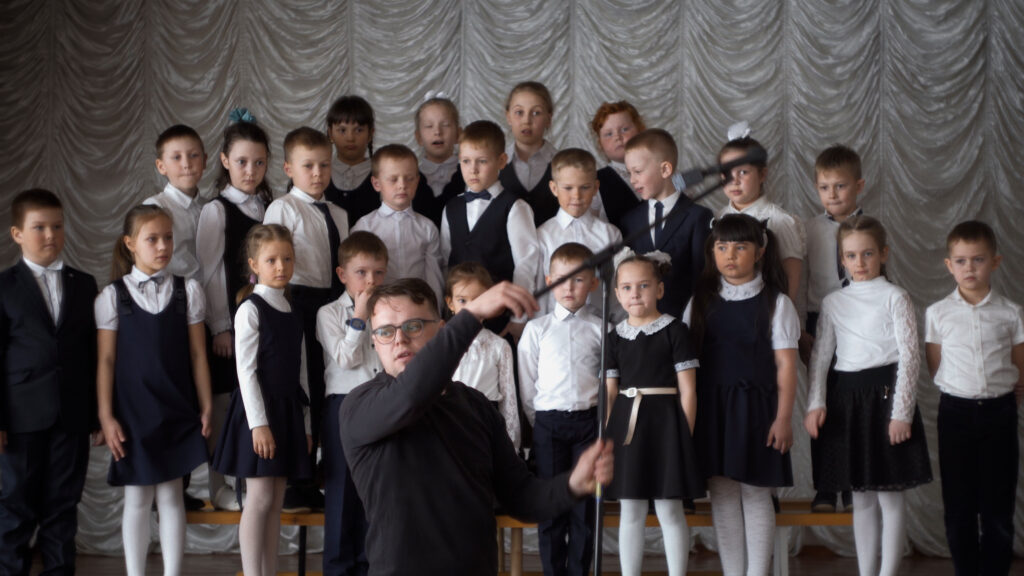
Film still from Mr Nobody Against Putin

What is perhaps most striking is the mismatch between reputation and content, despite receiving major recognition, including winning an Academy Award and BAFTA—the film itself feels closer to a home video than to rigorous documentary cinema. It gestures toward critique, particularly of the climate in Russian schools during the war in Ukraine, but the critique is surprisingly muted. The ideological pressure that should form the backbone of the narrative is reduced to mild classroom references and television broadcasts.

Even more paradoxical is the portrayal of the school environment. Karabash, often described as one of the bleakest industrial towns in Russia, appears here perfectly idyllic—the students are very polite, well-dressed, and emotionally balanced. Their relationship with Talankin is warm, even affectionate, with former students continuing to be friends with him. Rather than exposing systemic harshness or fear, the film presents a strangely harmonious microcosm, in this sense, it unintentionally contradicts its own supposed thesis.The presence of Vladimir Putin is also telling—he appears mostly as a distant figure on screens—serious, mediated, normalized. There is no real confrontation, no deep probing of power structures. Instead of dismantling propaganda, the film risks reproducing its most benign surface—with the film becoming less a powerful indictment than an ambiguous artifact.

The film’s production values reinforce this impression of amateurism. Talankin himself admitted that he did not edit the film; he simply supplied footage. The final product—shaky shots, casual framing, meandering pacing—often resembles a home video more than a polished documentary. And yet, astonishingly, this film received an Oscar. The question of why the Academy would reward such a modest project is central to understanding the work’s meaning. The answer seems to lie not in the craft, but in the mythology surrounding Talankin—presented as a lone observer and “everyman” in a Russian school, he functions as a symbolic figure—a vessel for audiences to project their own ideas of resistance. The obscurity of Bronstein amplifies Talankin’s role, making him the unambiguous face of the narrative, despite contributing minimally to the post-production process. In this sense, the Oscar seems less a recognition of cinematic quality and more a recognition of the narrative surrounding the protagonist: the “Mr. Nobody” who supposedly risks everything to expose subtle propaganda.
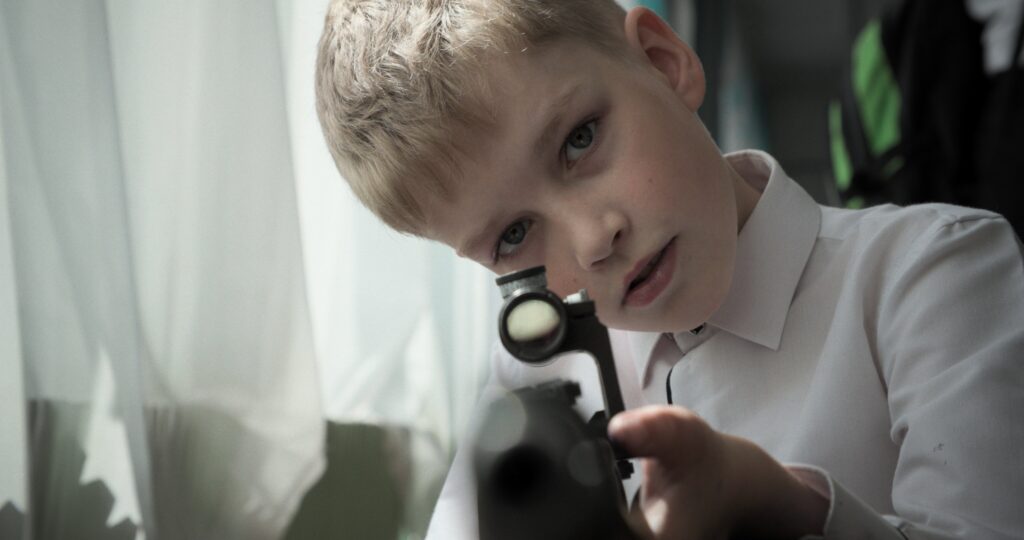
Film still from Mr Nobody Against Putin

But was there real courage? The film never provides concrete evidence. Talankin casually shows his passport from a distance; we are never told how he intends to cross borders, hide sensitive footage, or navigate the logistical hazards of filming in a politically charged environment. Even his mother, a librarian in the same school, remains safe and employed after the film’s international exposure, and Talankin departs Russia apparently calm about her welfare.

The Oscar may tell us more about the global appetite for certain narratives than about the film itself. Mr. Nobody Against Putin is less a work of documentary truth than a carefully curated illusion: a home-video aesthetic, a mysterious yet charming protagonist, and a celebratory ending all combine to create a story whose power lies in what it suggests, rather than what it shows. The film remains unresolved and profoundly puzzling—an artifact of myth-making as much as of cinema.

Film Reviews

 Previous Post

Next Post 

Author: Günther Kramer

Related Articles

Jim Carrey on Jimmy Kimmel Live! in 2014

Impostors in the Spotlight?

by Günther Kramer
April 16, 2026

Attack of the Clones—Jim Carrey, Pamela Anderson, and the Illusion We Applaud In March 2026, during the prestigious César Awards

‘Mengele’ Aims for Historical Thrills but Gets Lost in Execution

by Pete Brown
April 5, 2026

Canvas to Camera: The 15 Best Movies About Painters

by Pete Brown
March 25, 2026

Sydney Sweeney and Amanda Seyfried Anchor the Tense Mind Games of ‘The Housemaid’

by Pete Brown
March 1, 2026

Solaris 2026 Winners: A Celebration of Independent Cinema in Helsinki

by Günther Kramer
February 8, 2026

Brigitte Bardot: The Eternal Rebel of French Cinema Dies at 91

by Elena Ringo
December 28, 2025

Blood Star: Director Lawrence Jacomelli’s Debut Feature — The 10-Day Desert Shoot That Shouldn’t Have Been Possible

by Günther Kramer
December 10, 2025

The Curse of Modigliani (2025) — A Modern Interpretation on the Life of Amedeo Modigliani

by Günther Kramer
December 7, 2025

Latest News

Impostors in the Spotlight?

by Günther Kramer April 16, 2026 | No Comment

‘Mengele’ Aims for Historical Thrills but Gets Lost in Execution

by Pete Brown April 5, 2026 | No Comment

Canvas to Camera: The 15 Best Movies About Painters

by Pete Brown March 25, 2026 | No Comment

Mr. Nobody Against Putin — A Puzzle of Myth, Ambiguity, and the Oscar

by Günther Kramer March 25, 2026 | No Comment

Sydney Sweeney and Amanda Seyfried Anchor the Tense Mind Games of ‘The Housemaid’

by Pete Brown March 1, 2026 | No Comment

Solaris 2026 Winners: A Celebration of Independent Cinema in Helsinki

by Günther Kramer February 8, 2026 | No Comment

Brigitte Bardot: The Eternal Rebel of French Cinema Dies at 91

by Elena Ringo December 28, 2025 | No Comment

Blood Star: Director Lawrence Jacomelli’s Debut Feature — The 10-Day Desert Shoot That Shouldn’t Have Been Possible

by Günther Kramer December 10, 2025 | No Comment

The Curse of Modigliani (2025) — A Modern Interpretation on the Life of Amedeo Modigliani

by Günther Kramer December 7, 2025 | No Comment

The Haunting of Prince Dom Pedro — A Clever, Campy Indie That Makes History Class a Killer Good Time

by Günther Kramer November 3, 2025 | No Comment

Do Not Be Afraid of Anything: Ronn Moss Speaks from the Heart

by Elena Ringo October 11, 2025 | No Comment

Kristin Griffith and Artur Smolyaninov Win Top Acting Honors at Prague Independent Film Festival

by Günther Kramer September 25, 2025 | No Comment

Filmmaker Marcus Chan Talks Craft, Representation, and Creative Risk

by Diana Ringo July 11, 2025 | No Comment

Forever Breathless: 65 Years of Godard’s À bout de souffle

by Elena Ringo June 7, 2025 | No Comment

Clint Eastwood at 95: The Last Cowboy Still Rides

by Günther Kramer June 3, 2025 | No Comment

Cannes 2025: Loznitsa’s Two Prosecutors Stuns Critics as Jafar Panahi Takes Palme d’Or in Politically Charged Edition

by Günther Kramer May 25, 2025 | No Comment

Concrete Nothingness: How The Brutalist Builds to Nowhere

by Elena Ringo April 29, 2025 | No Comment

Watch the Curse of Modigliani Trailer—Obsession, Betrayal, and a Haunted Diary

by Günther Kramer February 22, 2025 | No Comment

Anora: A Vulgar Ass-ault on Cinema

by Elena Ringo December 21, 2024 | No Comment

A Raven in Tokyo: How Mark Gill Captured the Troubled Genius of Masahisa Fukase

by Diana Ringo November 14, 2024 | No Comment

Megalopolis: A Misstep from a Legendary Director

by Elena Ringo November 12, 2024 | No Comment

Inside the Making of “Saving Mango”: A Cat’s Story of Survival and Loyalty

by Diana Ringo October 27, 2024 | No Comment

Facing the Past: Exploring Generational Trauma in They Don’t Leave

by Diana Ringo October 3, 2024 | No Comment

Indie Cinema Magazine – Issue 7

by Günther Kramer September 22, 2024 | No Comment

Generations and Identity: Inside Ying Chu’s Ah-Ma: A Tale of Two Worlds

by Diana Ringo September 20, 2024 | No Comment

Exploring Love Through Grief: Darrell Bridgers’ Psychological Journey in “Zeke”

by Diana Ringo September 16, 2024 | No Comment

“HOME”: Shimizu K’s Latest Film Examines Family Relationships and the Complexity of Communication

by Diana Ringo September 14, 2024 | No Comment

Kyle Browne and Ken Kinna’s Meditative Film “Spirit Sensing: Anima of the Quarry”

by Diana Ringo September 8, 2024 | No Comment

Interview with film director and animation legend John Musker

by Diana Ringo September 8, 2024 | No Comment

The Untold Influence of Arleen Schloss: Stuart Ginsberg Discusses His Documentary Debut

by Diana Ringo September 5, 2024 | No Comment

The Magazine of Independent Cinema

Copyright © 2026 Indie Cinema Magazine

Social Links

  • Subscribe
  • About
  • Team
  • Contact