The French camera technician discusses life behind the lens, the craft of focus pulling, and the productions that have shaped his career
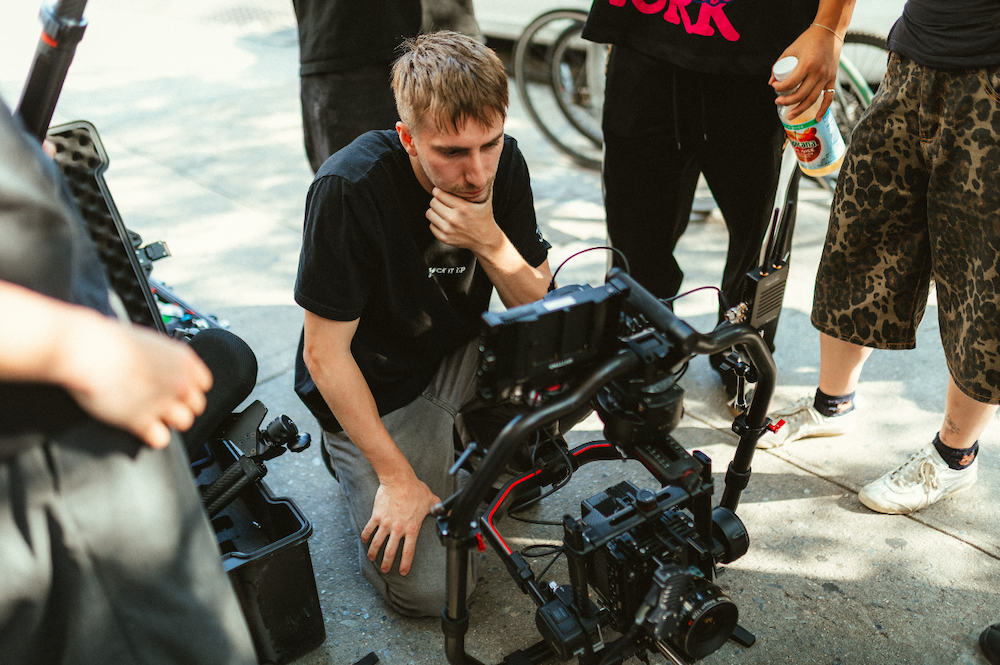
For Hippolyte Charlut, the journey into professional filmmaking has been shaped by a willingness to leave familiar territory, learn from every production, and gradually build his place within one of the world’s most competitive film industries. A French camera technician specializing as a Focus Puller and 1st Assistant Camera, Charlut began his cinematography studies in France before moving to New York, where he continued his education at ESRA New York and specialized in the American film and television industry at Stonestreet Studios. Since beginning his professional work in New York in 2024, he has built an increasingly diverse body of credits spanning independent films, documentaries, television, music videos, commercials, live performances and large-scale brand campaigns. His work has taken him from demanding narrative productions to fast-moving commercial and music-video sets, where precision, adaptability and teamwork are essential. Along the way, he has contributed to projects involving internationally recognized names including Jennifer Lawrence, Joe Jonas, Martha Stewart and Karol G, as well as campaigns and productions connected to brands such as L’Oréal Paris, Giorgio Armani, Adidas, Red Bull, Timex, Longines and Cartier. His earlier experience in France as a camera operator, video technician, photographer and editor also gave him a broad understanding of production before he increasingly specialized in the camera department. What makes his trajectory particularly interesting is the international dimension of his career: moving from France to New York, entering a new professional culture, building relationships from the ground up, and developing the technical skills necessary to work across very different types of productions.
But behind the impressive credits is a profession that remains largely invisible to audiences. As a Focus Puller, Charlut is responsible for maintaining precise focus while cameras move, actors improvise and scenes unfold at often unpredictable speeds—a role requiring technical knowledge, anticipation, concentration and an almost instinctive understanding of movement. His path from France to New York has given him a perspective on two very different filmmaking environments, while his experience across independent cinema, commercials, television and music has exposed him to an extraordinary range of visual approaches and working methods. In this interview, Charlut discusses his journey into the camera department, the challenges of focus pulling, the productions that have shaped him, his experiences working in New York, and what it takes to build a career behind the camera in an international film industry.
When you look back at the beginning of your career, what made you realize that working with a camera was the right path for you?
I’ve always been fascinated by cinema and the way images can tell stories and create emotions. When I started studying cinematography in France, I quickly realized that I was particularly attracted to the technical and practical side of filmmaking.
What I loved most was being on set, working with a team, solving problems, and seeing how every department contributed to creating a single shot.
When I moved to New York, I started working on different productions and gradually discovered the camera department from the inside. The more experience I gained, the more I realized that this was exactly where I wanted to be. I loved the combination of technical precision, creativity, teamwork, and the constant challenges that come with working behind a camera.
What does a great Focus Puller bring to a film that the audience may never consciously notice?
A great Focus Puller brings precision, anticipation, and confidence to every shot.
Our job is not simply to keep the subject sharp. We help guide the audience’s attention by ensuring that the focus follows the storytelling and the cinematographer’s intentions.
When everything works perfectly, the audience doesn’t think about focus at all. They remain completely immersed in the story.
I think one of the most important things a Focus Puller brings to a production is the ability to make complex camera movements and performances feel effortless.
Focus is invisible when it is perfect. What does it mean to you to create something that should never call attention to itself?
I think that’s one of the beautiful things about working in the camera department.
As a Focus Puller, you’re responsible for something extremely important, but your work is usually only noticed when something goes wrong.
For me, the satisfaction comes from knowing that I’ve helped create a shot that works exactly as intended. When the camera moves, the actors perform, and the focus follows everything perfectly, there’s a real sense of accomplishment.
I don’t necessarily need the audience to notice my work. What matters is that they experience the scene the way the director and cinematographer imagined it.
Can you remember a moment on set when you had to react instinctively and your experience as a Focus Puller made the difference?
One of the biggest challenges of focus pulling is that actors don’t always move exactly as rehearsed, especially during emotional or spontaneous performances.
There have been situations where an actor suddenly changed their movement or moved closer to the camera than expected. In those moments, you don’t have time to think through every adjustment. You have to react immediately.
One experience that immediately comes to mind was a shoot with cinematographer Felix Bailly. We were filming a nightclub scene with a large crowd, and just as the director called action, I realized I hadn’t been fully briefed on how the scene was going to unfold.
It turned out to be a very dynamic handheld sequence, shot at T2, with people constantly moving in every direction. As a Focus Puller, you’re supposed to anticipate movements, but that’s a little difficult when you have no idea what’s about to happen!
I had to rely entirely on my instincts, react to the camera operator’s movements, and constantly adjust my focus as people crossed the frame.
It was definitely a challenging moment, but also a great example of what I love about this profession. Sometimes preparation isn’t enough, and your experience, concentration, and ability to adapt become your most important tools.
What is the most challenging shot you have ever been responsible for, and what made it so difficult?
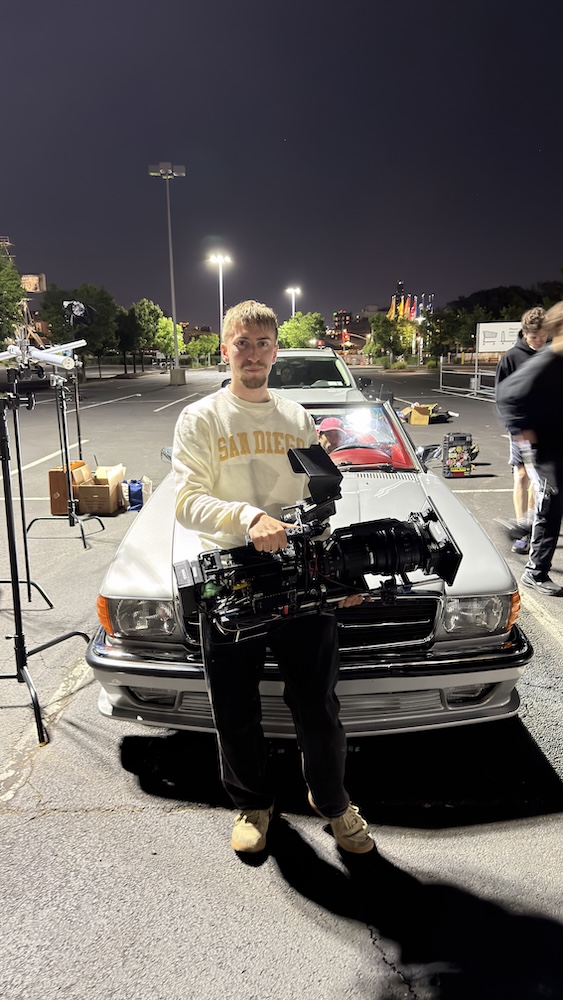
Some of the most challenging shots I’ve worked on involved moving cameras, wide apertures, and actors constantly changing their distance from the lens. I’ve been working on the VICE series Everybody Hates… alongside cinematographers Jeff Malo and Elwood Taylor.
We were filming in December, outdoors, in freezing temperatures. I remember that even the water bottles provided by production had frozen. We were shooting at night, around 2 a.m., and the scenes involved American football players moving constantly. The camera was handheld, we were shooting at T1.8, and there was a lot of unpredictable movement.
Keeping everything sharp with such a shallow depth of field was already challenging, but doing it in freezing temperatures, late at night, made the experience even more intense. Your hands are cold, your concentration is tested, and you still have to react instantly to every movement.
Looking back, it was probably one of the most physically and technically demanding shoots I’ve worked on so far. But it’s also the kind of experience that pushes you to improve as a Focus Puller.
How much of your work is technical precision, and how much is intuition and anticipation?
I would say it’s a combination of both, and you really can’t separate them.
Technical knowledge is the foundation. You need to understand lenses, depth of field, camera systems, distances, and the tools you’re using.
But intuition and anticipation become just as important once the camera starts rolling.
You have to predict where an actor is going, understand how the camera operator moves, and sometimes react before the movement actually happens.
The technical side gives you control, while experience and intuition allow you to adapt to situations that aren’t completely predictable.
How do you build trust with a cinematographer? Is it something that happens immediately, or does it develop throughout a production?
Trust develops through communication, preparation, and consistency.
When I start working with a cinematographer, I try to understand their visual approach, their preferences, and the way they like to work.
Some cinematographers prefer very precise technical discussions, while others work more instinctively. My responsibility is to adapt to their workflow and make their job easier.
Trust also comes from being reliable. When a cinematographer knows that the camera is ready, the equipment is properly prepared, and the focus is under control, they can concentrate more on lighting, composition, and storytelling.
The strongest working relationships are usually built over multiple projects.
What makes a cinematographer particularly inspiring to work with from your perspective?
I really enjoy working with cinematographers who have a strong visual identity but remain open to collaboration.
The most inspiring cinematographers are not necessarily the ones using the most expensive equipment or the most complicated setups. They’re the ones who understand exactly what they want the audience to feel through an image.
I also appreciate cinematographers who communicate clearly, trust their crew, and create an environment where everyone can contribute.
Working with someone like that pushes me to become better technically and creatively.
You have worked in both France and New York. What surprised you most when you first entered the American film industry?
One of the biggest surprises was how much the industry depends on networking and professional relationships.
When I arrived in New York, I didn’t have an established network. I had to meet people, prove myself on set, and gradually build relationships with cinematographers, producers, and other camera assistants.
I was also impressed by the variety of productions happening in the city. You can work on a small independent film one day and a commercial or music video with a completely different crew shortly afterward.
That environment taught me to adapt quickly, work with different personalities, and constantly improve my skills.
Has working in New York changed the way you see filmmaking or your own profession?
Absolutely.
Working in New York helped me understand that filmmaking is not only about creativity or technical knowledge. It’s also about discipline, relationships, adaptability, and being able to perform under pressure.
I started on smaller productions, sometimes taking on different responsibilities, before progressively specializing in the camera department.
That experience gave me a much better understanding of how a production operates as a whole.
It also taught me that every project, regardless of its budget, can teach you something valuable.
New York has an enormous variety of productions, from independent films to commercials and music videos. What have these different environments taught you?
Each type of production has taught me something different.
Independent films often require flexibility, creativity, and the ability to find solutions with limited resources. Commercials usually involve very precise technical requirements and high expectations for image quality and efficiency.
Music videos can be particularly exciting because they often experiment with unusual camera movements, lighting, and visual storytelling.
Working across these environments has made me more adaptable and helped me understand how to approach each project according to its creative and technical needs.
What is the biggest misconception people have about the work of a Focus Puller?
I think the biggest misconception is that our job is simply turning a wheel to keep an actor sharp.
In reality, focus pulling involves much more preparation and responsibility.
As a 1st Assistant Camera, I’m also involved in preparing the camera package, checking equipment, coordinating lens changes, troubleshooting technical issues, and making sure the camera department is ready for each setup.
During a take, I have to follow the action while anticipating what might happen next.
It’s a job that requires technical knowledge, concentration, organization, and strong communication with the entire camera team.
How has the transition from traditional cinema cameras to increasingly sophisticated digital systems changed your profession?
Digital technology has changed the way camera departments operate, particularly through wireless monitoring, advanced focus systems, and increasingly sophisticated camera equipment.
Today, we have access to tools that provide more information and flexibility than ever before.
However, these systems also create new technical responsibilities. A Focus Puller needs to understand wireless communication, monitoring systems, camera configurations, and the limitations of different technologies.
I think the profession has become increasingly technical, but the fundamental objective remains the same: ensuring that the image serves the story.
Do you think technology can ever replace the human instinct and concentration required from a Focus Puller?
Technology will certainly continue to evolve, and some systems are already capable of assisting with focus tracking.
However, I believe there’s an important difference between keeping something technically sharp and understanding where the audience’s attention should be.
Focus can be a creative decision. Sometimes the important subject isn’t the closest person to the camera, and sometimes the timing of a focus transition contributes directly to the emotion of a scene.
Technology can assist us, but understanding the storytelling, the actors’ performances, and the cinematographer’s intentions still requires human judgment.
Is there a particular director, cinematographer, actor, or production that had a significant influence on your professional development?
I’ve been fortunate to work regularly with several cinematographers who have had a significant influence on my development, particularly Felix Bailly, Jeff Malo, and Darren Tun.
Working with each of them has exposed me to different visual approaches, technical challenges, and ways of operating on set. Through these collaborations, I’ve been able to improve my focus pulling, expand my technical knowledge, and become more confident in my responsibilities as a 1st Assistant Camera.
I’ve also worked extensively with directors Eric Weber and Isaac F. Davis, who have introduced me to different types of productions and creative environments.
What I appreciate most about these relationships is that every project brings a new challenge. Working repeatedly with people you trust allows you to develop a stronger understanding of their creative vision and become more efficient as a team.
I believe a large part of my professional growth has come from these collaborations and from the people who have trusted me with increasing responsibilities throughout my career.
Which project from your career remains especially memorable to you, and why?
One of the most memorable experiences of my career was working on a Longines commercial featuring Jennifer Lawrence.
At the time, I was working as a Production Assistant, so I wasn’t part of the camera department. However, it was my first experience on a major commercial production involving such a well-known international actress.
During the shoot, I became the producer’s personal assistant, which gave me the opportunity to be directly involved in the production environment and observe the different setups from up close.
I remember being fascinated by the scale of the production, the level of organization, and the number of professionals working together to create each shot.
Even though my role was different from what I do today, that experience had a real impact on me. It allowed me to see firsthand how a major commercial production operates and motivated me even more to continue developing my career in the camera department.
What is the most beautiful image you have helped create or capture during your career?
The first is Cella’s Theme, directed by Jay Welch, where I worked as a Focus Puller alongside cinematographer Darren Tun.
We were filming in upstate New York, surrounded by open fields and beautiful natural landscapes. The sunlight, the costumes, the locations, and the overall atmosphere came together to create images that I found genuinely beautiful.
What made those images special to me was how naturally all the visual elements complemented each other. Sometimes you don’t need an extremely complicated setup to create something cinematic. The right location, the right light, and a strong artistic vision can make all the difference.
Another project that really stayed with me was a commercial for Hôtel Fouquet’s, particularly a scene filmed inside a bar. I remember being impressed by the atmosphere, the lighting, and the overall composition.
Both experiences reminded me why I love working in cinematography. Beyond the technical challenges, being part of the creation of a beautiful image is incredibly rewarding.
When you watch a film you did not work on, do you find yourself noticing the focus and camera work, or are you able to simply watch the film as an audience member?
It’s definitely more difficult to watch films without noticing the technical details now!
I naturally pay attention to camera movements, lens choices, framing, and focus transitions.
Sometimes I find myself wondering how a particular shot was achieved or imagining the equipment and preparation required.
But I still love getting completely immersed in a film. In fact, when a movie is so engaging that I stop analyzing the camera work, I think that’s a sign of really successful filmmaking.
What qualities separate a technically competent Focus Puller from an exceptional one?
Technical knowledge is essential, but I think an exceptional Focus Puller needs much more than that.
Anticipation is probably one of the most important qualities. You have to understand what might happen before it happens.
Communication is equally important, because you’re constantly working with the cinematographer, camera operator, actors, and other crew members.
You also need to remain calm under pressure, adapt quickly when something changes, and maintain a high level of concentration throughout long shooting days.
Ultimately, I think the best Focus Pullers are the ones who combine technical precision with a genuine understanding of filmmaking and storytelling.
What advice would you give to a young camera assistant who dreams of building an international career?
My first advice would be to get as much experience on set as possible.
When I arrived in New York, I didn’t immediately start working as a Focus Puller. I worked on smaller productions, learned from other technicians, and gradually built my experience and professional network.
I think it’s important to stay curious, ask questions, and never consider any job too small to learn something from.
Building an international career also requires patience and determination. You have to adapt to different working environments, meet new people, and sometimes start again from the beginning.
Most importantly, focus on becoming someone people genuinely enjoy working with. Technical skills are essential, but professionalism, reliability, and a good attitude are what make people want to hire you again.

