After an eight-year journey from UC Berkeley’s pre-med track to Hollywood, the actress opens up about her feature-film leading-role debut in Dara Frazier’s A Neglected Wife, the emotional weight of carrying a film, and the breakthrough that’s redefining her career.
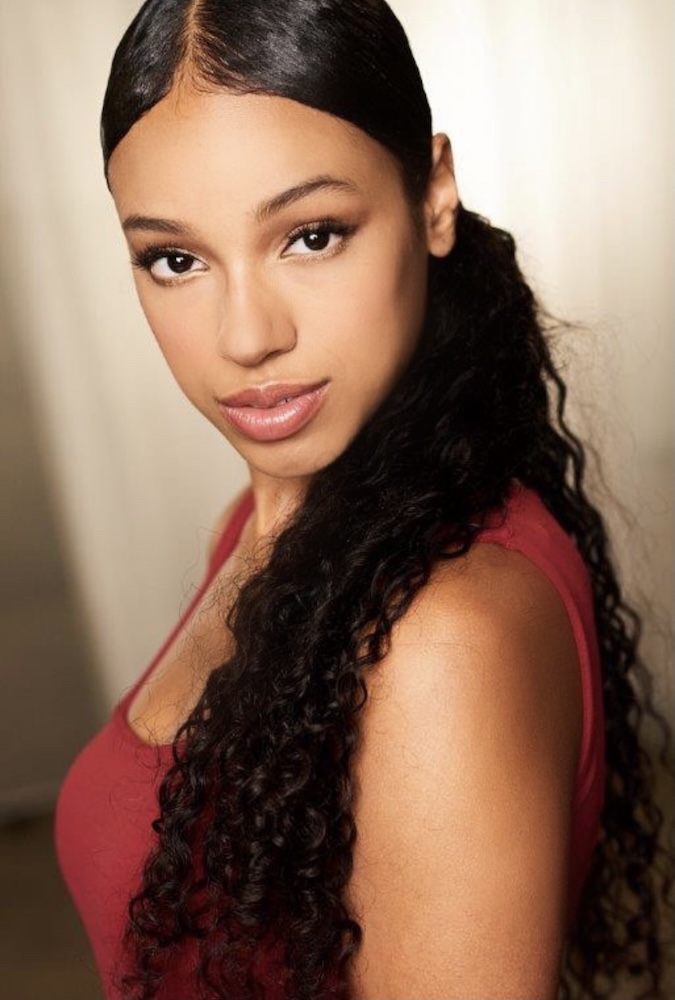
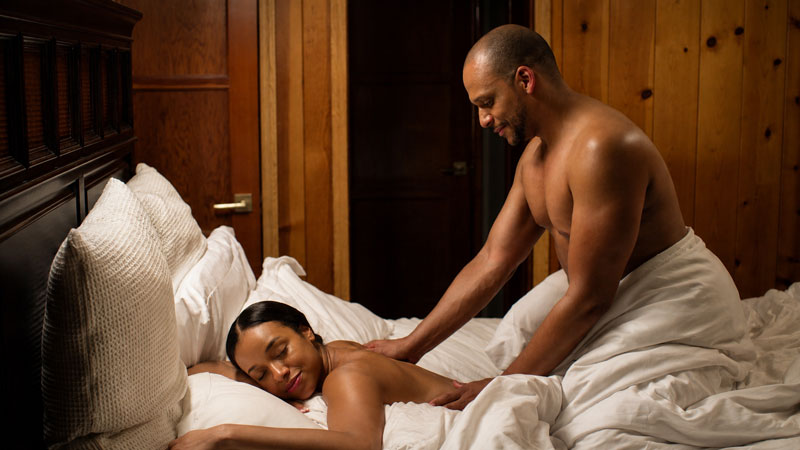
Nearly a decade into building her career across independent film, television, theater, and fashion, Farryl Christina Lawson has reached a defining milestone. The Los Angeles-based actress makes her feature-film leading-role debut as Belinda Montgomery in A Neglected Wife, the 1642 Productions thriller written, directed, and produced by Dara Frazier. Premiering Aug. 25 on Apple TV and Prime Video, the 83-minute film follows a woman whose seemingly stable marriage begins to unravel, leading her into an affair that awakens long-buried desires before uncovering darker secrets within her own home. Lawson stars alongside Devin Laster, Ashley Clarice and Rowe, with cinematography by Andy Chinn and editing by Gary Lee Cohen.
The breakthrough arrives after years of persistence that Lawson candidly describes as an eight-year journey of “believing, waiting, working, and refusing to give up.” A graduate of the University of California, Berkeley, where she earned a B.S. in Molecular Environmental Biology with a minor in Theater and Performance Studies, she walked away from a pre-med path to pursue acting full time in Los Angeles. Since then, she’s appeared in projects including Séance Games: Metaxu and The Purest Form, walked in New York Fashion Week for Actively Black, and now enters a new chapter with multiple leading projects across film and television. In conversation with Indie Cinema Magazine, Lawson opens up about carrying her first feature film, collaborating with Frazier, the emotional demands of portraying Belinda, and why she believes this moment marks the beginning of what she calls her “main character era.”
A Neglected Wife is your first leading role in a feature film. What did it mean to you to step into that responsibility?
It meant everything to me. I had waited my entire career for that moment—to step into the role of a leading lady and be #1 on the call sheet.
I moved to Los Angeles in 2018 after graduating from UC Berkeley, where I majored in Molecular Environmental Biology and minored in Theater and Performance Studies. I was on a pre-med track and had a very different path laid out for me, but my heart just wasn’t in it. I knew I loved acting. I loved performing. It was—and still is—the deepest desire of my heart. So, with a lot of faith, I took a leap and moved to LA to pursue a career in film and television.
It took me five years to book my first feature film, Seance Games: Metaxu, where I played a supporting role, Julia the ghost. Three years later, I booked Belinda in A Neglected Wife, and she became my first leading role. So, in many ways, this role represents eight years of believing, waiting, working, and refusing to give up.
There were definitely moments when I wanted to. The path hasn’t been easy, and there were times when I questioned whether I was on the right one. But my mom always told me, “Stay on the road. Don’t exit. Don’t detour. Just keep going. You will reach your destination.”
A Neglected Wife feels like one of those destinations. To finally see my name at the top of a call sheet and know that someone trusted me to carry a story was incredibly meaningful. I’m so grateful for the opportunity to play Belinda and for everyone who believed in me enough to give me that chance. More than anything, this role reminded me that sometimes the dream takes longer than you imagined but that doesn’t mean it isn’t coming.
What drew you to Belinda Montgomery and made you want to tell her story?
What drew me to Belinda is that, at her core, she is the quintessential everyday woman. She married young, works from home, lives in a beautiful, seemingly perfect cul-de-sac, and has built her entire identity around being a wife. She genuinely loves her husband, and being a good wife is one of the most important things in her life.
I think that’s what makes her so relatable. When we meet Belinda, she’s in a rut. The excitement of being newly married has faded, her husband seems to be losing interest, and her household is slowly beginning to unravel. On the outside, she tries to convince herself that she’s happy and that everything is fine. But underneath that, she’s beginning to question who she is beyond being a wife and what she truly wants for herself.
That really drew me to her. I wanted to explore what happens when a woman has spent so much of her life pouring into everyone else that she starts to realize she may have neglected herself in the process.
I also connected deeply with the themes of feeling unseen and undervalued, particularly for Black women. There are so many women who can feel invisible—not only in their relationships and homes, but sometimes in the world around them. Belinda’s experience speaks to that feeling of wanting to be seen, heard, desired, and valued as your own person.
The idea of being “neglected” really intrigued me because I think, in one way or another, we’ve all experienced that feeling. Maybe we’ve felt neglected by a partner, by our families, by friendships, or even by ourselves. Belinda’s journey gave me an opportunity to explore what it means to finally recognize that feeling and ask yourself, “What do I want? Who am I outside of the roles I’ve been given?” That was a story I really wanted to tell.
Belinda experiences love, loneliness, betrayal, and guilt. What was the biggest challenge in bringing those emotions to life?
The biggest challenge was learning how to be honest and vulnerable without simply “playing the problem” of being a neglected wife. On the surface, Belinda could easily come across as one-note—unhappy, lonely, emotional, or even desperate for her husband’s attention. But I didn’t want to reduce her to those emotions.
I wanted to find the woman underneath the circumstances. For me, that meant playing her truth rather than playing the idea of a “neglected wife.” Belinda is experiencing so many conflicting emotions at once: she loves her husband, she feels lonely, she wants to be desired, she feels betrayed, and she carries guilt for some of the choices she makes. Those things can all exist simultaneously.
The challenge was finding those different layers and allowing myself to be vulnerable enough to let the audience see them. I wanted Belinda to feel like a real woman—not a character defined by one problem, but someone trying to navigate a complicated situation while figuring out who she is and what she truly wants. That emotional honesty was really important to me.
How did you prepare for a role that required so much emotional vulnerability?
I prepared by studying the script deeply and creating a strong internal world for Belinda through my imagination. I actually try not to draw too heavily from my own personal experiences when preparing for emotionally demanding roles. I’ve found that when I do, I can become too internal and get stuck in my own body rather than being fully present with my scene partner.
I’m a trained Meisner actor, so I really believe in the idea of “living truthfully under imaginary circumstances.” My preparation is about understanding the character, her circumstances, and what she wants, and then trusting myself to live truthfully within those circumstances once we’re in the scene.
A big part of that is active listening. I wanted to truly listen to my scene partners and allow myself to instinctively respond to whatever was happening in the moment, rather than deciding in advance how Belinda should feel or react. For me, that’s where the vulnerability comes from—being prepared enough to let go of the preparation and simply be present.
Was there a scene that challenged you more than any other during filming?Yes, absolutely. I don’t want to give away too much, but there’s a scene toward the end of the film where the truth is finally revealed, and that scene required a really deep, raw emotional truth from me.
What made it especially challenging was where we were in the filming process. By that point, we had been working long, 12-hour days, and I was becoming both mentally and physically exhausted. When you’re that deep into a shoot, you start to feel the fatigue, and sometimes you can begin to doubt yourself a little. It becomes a mental game as much as an emotional one.
I remember having to remind myself, “I can do this. I’m prepared. Trust yourself. Just one final push.” It’s also a major moment in the film, so I knew I had to be emotionally available and give the scene everything it needed without forcing it.
Those are the moments where you really have to trust your training, your preparation, and your instincts as an actor. It was challenging, but it was also one of the moments that reminded me why I love this work.
What was it like collaborating with writer, director, and producer Dara Frazier?
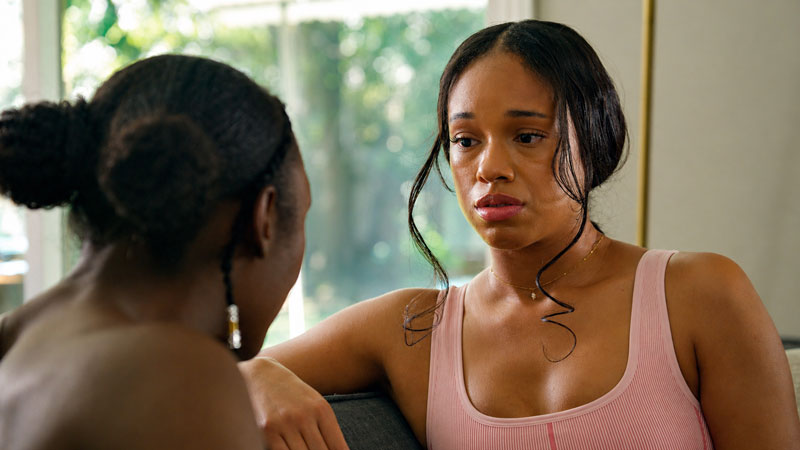
It was honestly a dream come true. Dara Frazier is a true visionary, and she has become not only a major inspiration to me, but also a mentor.
As a Black woman who writes, directs, and produces her own projects, Dara is a trailblazer in my eyes. She is a 2026 NAACP Image Award nominee and an active member of the prestigious Harlem Writers Guild, and I have so much admiration for the way she continues to create opportunities and tell stories from her own perspective. There aren’t enough Black women in Hollywood occupying all of those roles, so to be able to work alongside someone like Dara has been incredibly meaningful to me.
From the moment I stepped onto her set, I felt at home. She created an environment where I felt comfortable, trusted, and completely free as an artist. She gave me room to make Belinda my own rather than trying to control every moment. When she had a note, she gave it, and I always felt that it came from a place of wanting to elevate the work. That trust allowed me to take risks and really immerse myself in the character.
What makes our collaboration even more special is that A Neglected Wife wasn’t the end of our working relationship. I recently wrapped another feature film with Dara, Christmas Offer, where I star as Marshelle. Having her ask me back to lead another one of her films was truly a pinch-me moment. I think every actor dreams of being called back, but being invited back by a director, writer, and producer you genuinely respect and have such a strong creative relationship with makes it even more special.
I’m incredibly grateful that our paths crossed. Dara is extraordinarily talented, and I feel very fortunate to have learned from her, created with her, and built a relationship that I hope will continue for many years and many more films to come.
Without giving away spoilers, what do you think audiences will relate to most about Belinda’s journey?
This question actually makes me laugh a little because I think audiences are going to have very strong opinions about Belinda. I think they’ll either be completely on her side or they’ll have a lot to say about some of her choices—and I love that. To me, that’s a sign of a character who gives you something to talk about.
What I think audiences will relate to most is Belinda’s desire for more. More happiness. More intimacy. More love. More connection. More of that feeling of being seen, wanted, and desired. I think most of us, at some point in our lives, have looked at where we are and wondered, “Is this really it?”
Belinda is forced to confront that question throughout the film. As her journey unfolds, she begins to recognize her own worth and realize that she deserves to feel fulfilled, not simply exist within a life that looks perfect from the outside.
I think that desire is incredibly human and relatable. We all want to feel loved, chosen, seen, and valued. What makes Belinda’s journey interesting is how far she’s willing to go to find that feeling—and I think audiences will have a lot to say about whether they agree with her choices along the way.
The film explores emotional neglect within a marriage. What conversations do you hope it sparks among viewers?
I hope the woman who feels neglected leaves her husband—just kidding! But honestly, I hope the film encourages people to take a closer look at what they’re accepting in their relationships.
For viewers who are in relationships, I hope it makes them ask themselves: Do I feel seen? Do I feel heard? Do I feel loved, desired, and emotionally fulfilled? And for those who are single, maybe it encourages them to think about what they want—and, just as importantly, what they don’t want—in a future relationship.
I also think the film may cause people to reflect on moments in their own lives when they felt neglected, overlooked, or taken for granted. Sometimes we don’t realize how much we’ve overcome until we look back at where we were and where we are now.
Ultimately, I hope the film sparks honest conversations about emotional needs, communication, self-worth, and the difference between simply being in a relationship and actually feeling fulfilled within one. I think it will make people reflect, and maybe even have some uncomfortable conversations—and I think that’s a good thing.
You’ve said this role stretched you as an actor. In what ways did it push you outside your comfort zone?
First, I’ve never been married, but I have experienced feeling neglected in a relationship, so I was immediately intrigued by Belinda’s story. I had an emotional understanding of that feeling, but I still had to step into circumstances and experiences that were very different from my own.
What really pushed me outside of my comfort zone was that this wasn’t just my first leading role—it was an emotionally demanding and nuanced character that required me to be fully present from beginning to end. I was in every scene, memorizing an enormous amount of material in less than two weeks, while also learning what it meant to carry a feature film as the lead.
There was the logistical side of being #1 on the call sheet—knowing my lines, understanding the schedule, being prepared for whatever the day required—and then there was the completely different challenge of showing up on set and becoming Belinda emotionally, physically, and psychologically. With a rigorous shooting schedule and long days, I had to learn how to conserve my energy while still giving the character everything she needed.
I truly felt stretched in every way imaginable. But it was also an incredible opportunity for growth. I leaned heavily on my training, my faith, and my inner strength, and I learned to trust the process and trust myself. I didn’t have to know exactly how everything was going to unfold. I just had to show up prepared, stay present, and give my best every day.
Did playing Belinda change the way you think about relationships or resilience?
Absolutely. Belinda reminded me just how essential resilience is. I actually pride myself on being a resilient person, so I connected with that part of her deeply. Life is going to challenge you, disappoint you, and sometimes force you to start over. What matters is how you choose to move through it.
Playing Belinda also made me think more deeply about what we accept in relationships. I’m at a place in my life now where I genuinely believe that if a relationship isn’t sweeter than my solitude, I don’t want it. I would rather be alone and at peace than be with someone and feel unseen, unheard, or unfulfilled.
I also believe that real growth happens within yourself. You have to learn how to love yourself before you can truly love someone else, and sometimes we’re so focused on what another person isn’t giving us that we forget to look inward and ask ourselves what we need to change, heal, or understand.
We can’t make another person responsible for our happiness, and we can’t blame someone else for every place where we feel unfulfilled. There is so much power in taking accountability, being honest with yourself, and getting clear about what truly makes you happy.
Belinda’s journey reminded me that resilience isn’t just about surviving difficult experiences. It’s also about having the courage to look at yourself honestly, recognize your worth, and make choices that honor who you are becoming.
You recently appeared in The Purest Form. How does A Neglected Wife represent a turning point in your career?
I actually think this question is interesting because A Neglected Wife is part of a larger evolution in my career. The Purest Form is a romantic comedy, while A Neglected Wife is a thriller, so I’ve been having fun exploring different genres and showing audiences different sides of myself as an actor.
I actually started my feature-film career with horror in Seance Games: Metaxu, which ended up being very on-brand for me because I grew up watching horror movies with my mom, dad, and sister. It was kind of our family thing. After Seance Games, I booked Fractured, a thriller, and then another horror film, Rush. So I’ve definitely spent some time in the darker genres!
What’s funny is that I filmed The Purest Form after A Neglected Wife, and then I recently wrapped Christmas Offer, which is another romantic comedy. So if anything, I’d say The Purest Form may be the beginning of my rom-com era. A Neglected Wife represents something different: it was the moment I stepped into my first leading role and proved to myself that I could carry a feature and take on a character with real emotional complexity.
I’m really excited that my career is becoming so multi-genre-faceted—if that’s a thing! [laughs] I don’t want to be boxed into one type of character or one type of story. I want to be an actor who can make you laugh, make you cry, scare you, surprise you, and hopefully make you feel something long after the credits roll.
Your path to Hollywood began at UC Berkeley, where you studied Molecular Environmental Biology with a minor in Theater and Performance Studies. How has that unique background shaped your approach to acting?
I think my background has shaped my work ethic more than anything. Studying Molecular Environmental Biology at UC Berkeley taught me to be disciplined, analytical, and incredibly detail-oriented. I’m naturally very logical and I love to study, learn, and understand how things work. I think that mindset translates directly into how I approach acting.
I’m also a perfectionist by nature, so when I’m preparing for a role, I want to understand every detail—who the character is, what motivates her, what she wants, what she’s afraid of, and why she behaves the way she does. I’m very specific in my preparation because I believe the more work you do before you step onto set, the more freedom you have to be present and spontaneous once the cameras are rolling.
And Berkeley definitely taught me how to study and memorize information quickly. [laughs] I practically lived in the library! Studying is in my DNA. So when I had to memorize an entire feature film for A Neglected Wife in less than two weeks, that academic training kicked in. I knew how to break down a massive amount of information, create a system, and get to work.
I think the combination of science and theater has given me a really unique approach: I bring the discipline and analytical mind of a scientist, but I get to pair it with the imagination, intuition, and emotional freedom of an artist. Those two sides of me actually complement each other really well.
Was there a defining moment when you decided to pursue acting professionally?
I honestly think I’ve wanted to be an actress for as long as I can remember. I grew up watching so many movies and television shows that made me fall in love with storytelling and the people who brought those stories to life.
One memory that always comes to mind is from when I was about six or seven years old. My mom was watching Good Times in our media room, and I wasn’t sure if I was old enough to watch it, so I would sneak behind the stair banister and watch with her without her knowing—or maybe she knew the whole time! [laughs] I was completely fascinated by the actors. I loved the entire Evans family—Florida, James, Thelma, Michael—and of course Willona and J.J. I remember wishing I could somehow walk through the television and be on the show. I wanted to do what they were doing. Even at that age, there was something about acting that felt magical to me.
But when I went to UC Berkeley, I initially pursued the path I thought I was supposed to take. I majored in Molecular Environmental Biology and was very much on the science track. My parents always supported my acting dreams, but I grew up doing summer research and was essentially a scientist by the time I was 16, studying the effects of a breast cancer treatment drug on normal cells. I loved learning, but I also knew there was another part of me that needed to create.
I had always done musical theater and stage productions growing up, so minoring in Theater and Performance Studies felt very natural. But it was really during college that I started learning more about myself and realizing that acting wasn’t just something I loved—it was what I wanted to build my life around.
So after graduating in 2018, I took a leap of faith and moved to Los Angeles to pursue acting in film and television. It was scary to walk away from the traditional path I had been on, but I knew I had to give myself the opportunity to find out what was possible. And the rest, as they say, is history.
If you weren’t working in entertainment, what career do you think you’d have pursued?
Honestly, I’d probably be a professional surfer or a storm chaser! [laughs]
I surf for fun now, but I’ve always had this little dream of becoming a professional surfer. There’s something about being in the ocean that I absolutely love, and getting to combine that passion with my athletic side would be incredible.
And because my science brain never really left me, I’ve also always been fascinated by storms. I would absolutely be a tornado chaser like the characters in Twisters. In fact, one of my dream roles is to play a scientist in a film—especially a scientist who gets to do something intense and adventurous.
Although, honestly, playing a professional surfer in a movie and getting to do my own stunts would be INSANE. I would sign up for that in a heartbeat. So maybe I don’t actually have to choose between my passions after all!
Your journey into acting wasn’t a traditional one. What inspired you to take the leap into pursuing it professionally?
I bet on myself. More importantly, I chose what I knew would make me feel fulfilled.
Growing up, I had a very traditional idea of what success looked like. I thought you went to school, earned a degree, became a doctor or a lawyer, got a good 9-to-5 job, and built a life that other people would look at and consider successful. There’s nothing wrong with that path, but I realized it wasn’t my path.
I had to learn to quiet the outside noise and listen to what I actually wanted. Acting had always been my heart’s deepest desire, and eventually I realized that I would regret it more if I never gave myself the chance to pursue it.
So I took the leap. I moved to Los Angeles, started from the ground up, and committed to figuring it out along the way. It hasn’t always been easy, and of course self-doubt creeps in sometimes, but I’ve never stopped believing that I’m meant to walk this path.
I’ve always been ambitious, and I think there’s something powerful about being willing to bet on yourself even when you don’t have all the answers. I believe in myself, I trust the journey, and I truly believe that what is meant for me will always find me.
Looking back, what were some of the biggest lessons you learned while building your career before landing your first lead role?
One of the biggest lessons I’ve learned is to never give up on your dreams, even when the timeline doesn’t look the way you imagined it would. I’ve learned that what feels like rejection in the moment can actually be protection, redirection, or preparation. I truly believe that what is meant for me will always find me.
For a long time, I had a lot of anxiety about what was next. Even after booking my first lead role, I remember thinking, “It took me six years to book this project. Am I going to have to wait another six years to book my next one?” Looking back, I realize that was fear talking. I was limiting myself by assuming the future had to look like the past.
The funny thing is, I was already in the casting process for my next project while I was filming Seance Games: Metaxu. A month after wrapping that film, I was on another set. That experience completely changed the way I viewed my career. I realized I couldn’t allow the length of time it took to get one opportunity to convince me that the next one wouldn’t come.
Once my mindset shifted, I felt unstoppable. I became much more intentional about what I was speaking over my life and the way I viewed myself. I started reminding myself every day: “I am a talented actress.” “Casting calls come easily to me.” “I am capable of carrying a leading role.” I believe deeply in the power of faith, prayer, manifestation, and daily devotion, but I also believe those things have to be paired with action.
The biggest lesson has been to keep moving, keep believing, and not let one season of my career define the next. Sometimes the breakthrough is closer than you think.
How did it feel when you found out you had booked the role of Belinda Montgomery?
I remember feeling ecstatic—and honestly, relieved. [laughs] It was a really special audition experience because we had in-person callbacks, which feels increasingly rare post-COVID. I got to go into the room, read with other actors, and, of course, quietly size up the competition—which is always nerve-wracking! [laughs]
Everyone brings something different to an audition. There are so many talented actors, and sometimes I can get in my head comparing myself to what someone else is bringing into the room. I’ve had to learn to remind myself, I am enough. I have something unique to offer.
So when I received the email saying I had booked Belinda, I screamed and cried tears of joy. I immediately thanked God and called my mom—she’s always my first call. It was such a huge moment for me. This wasn’t just another acting job; it was my first leading role in a feature film after years of working toward it.
I remember calling my family and sharing the news, and everyone was so incredibly proud of me. There was just this overwhelming feeling of, Wow. This is really happening. After everything it took to get there, booking Belinda felt like a moment I’ll never forget.
What did leading a feature film teach you about yourself as an actress?
Leading a feature film taught me that I am capable. That I am worthy. And that I have what it takes to be a leading lady.
You can dream about seeing your name at the top of a call sheet, but you don’t fully understand the responsibility that comes with it until you’re actually there. Being #1 on the call sheet isn’t all glamour and fun—it comes with pressure, long days, a lot of responsibility, and the expectation that you’re going to show up every single day ready to give the production everything you have.
This experience taught me that I wasn’t just hoping I was ready for this—I was ready. I was prepared, committed, and willing to work tirelessly to help make the film a success.
Most importantly, it taught me to trust myself. I rose to the challenge, pushed through the difficult days, and proved to myself that I could carry a film while still giving Belinda the depth and vulnerability she deserved.
I’m incredibly proud of myself. Not just for booking the role, but for everything it took to step into it and rise to the occasion. A Neglected Wife showed me that I’m not just capable of being a leading lady—I’m capable of building the career I’ve always dreamed of.
How did you prepare to portray Belinda’s emotional complexity in a way that felt authentic?
Honestly, a lot of my preparation came from studying the script and really digging into Dara’s writing for the hidden clues, context, and emotional history beneath the dialogue.
For me, the biggest distinction was understanding that I wasn’t “playing” a neglected wife. Belinda wasn’t putting on a performance of being neglected—that was her truth. That was her lived experience in that moment. I had to understand what it felt like for her to exist in that reality day after day.
What was especially important was remembering that Belinda hadn’t always been there. She wasn’t always lonely or disconnected from her husband. At one point, she was happy, fulfilled, and deeply in love. So I spent a lot of time thinking about how she got from there to here.
We meet Belinda after the emotional neglect has already begun to take root, so as an actor, I had to create the history that the audience doesn’t necessarily see. What happened before the first scene? What has she been tolerating? What has she tried to communicate? What has she convinced herself to accept?
That backstory helped me find the complexity in her. She isn’t simply an unhappy wife—she’s a woman who remembers what it felt like to be loved and desired and is now trying to reconcile that with the reality of what her marriage has become. That contrast was really important in making her feel human and authentic.
Were there any personal or creative experiences you drew from while developing Belinda’s character?
I generally try not to draw too heavily from my own personal experiences when developing a character. I’ve found that when I do, I can sometimes create an emotional block because I become too aware of myself rather than fully stepping into the character’s world.
Instead, I like to build a detailed backstory and create a life for the character that exists beyond what we see on the page. I worked on Belinda as much as I could in my weekly acting classes, exploring her circumstances, relationships, motivations, and emotional life with my acting teacher and classmates. That process helped me develop a deeper understanding of who she was and where she was coming from.
What was interesting is that I had a very clear vision of Belinda almost immediately when I read the script. I could see her, hear her, and understand the world she lived in. Dara’s writing was so specific, thoughtful, and layered that it gave me so much to work with. In a lot of ways, she made my job easier because the character was already so clearly defined on the page.
My job was to take what Dara created and bring it to life—to fill in the spaces between the lines and make Belinda feel like a fully realized woman with a history, desires, contradictions, and a life beyond what the audience sees.
Independent films often require actors to wear many hats. What was that experience like on the set of A Neglected Wife?
One of the things I love about independent films is the freedom. You have a lot of creative ownership, but that freedom also comes with a lot of responsibility and requires you to be flexible.
There’s definitely more to juggle—from wardrobe and sourcing pieces to hair and makeup. There was a team supporting me, but I was still very involved in pulling together Belinda’s overall look. Because her appearance is part of her story, we were intentional about making sure her hair, makeup, and wardrobe reflected where she was emotionally and what she was experiencing in her marriage.
Thankfully, I was able to stay focused primarily on the acting, which made for a really positive experience. The days were long and the schedule was demanding, but the cast and crew were incredibly kind, collaborative, and fun to work with. Everyone was there because they genuinely cared about making the best film possible.
That’s one of the things I really appreciate about independent filmmaking—you’re often working with a smaller team, but there’s a real sense of community. Everyone is pitching in, everyone is invested, and you feel like you’re building something together.
What surprised you most about working on an independent feature compared to your previous projects?
Honestly, not much surprised me because I’ve primarily worked on independent projects throughout my career, so I already had a pretty good understanding of what to expect.
What I continue to love about independent filmmaking is the creative freedom. There’s often a wonderful sense of collaboration because everyone is working closely together and has a personal investment in bringing the story to life.
I really enjoy being part of that process. There’s something special about independent films because you’re not just showing up to do your job—you often feel like you’re helping build something from the ground up. That creative freedom and sense of ownership are a big part of why I love working in the indie space.
How did the cast and crew create an environment that helped you deliver such an emotionally demanding performance?
The cast and crew created such a supportive environment for me, which was especially important because the film has a lot of intimate and emotionally vulnerable moments. The cast is also very small—there are only five roles—so it really felt like an ensemble.
We became close very quickly, and I immediately felt comfortable with everyone. Before we started filming, we had a table read and dinner rehearsal together, which was such a great way to break the ice and establish a sense of trust before stepping into some of the more emotionally demanding scenes.
Everyone was incredibly talented, generous, and easy to collaborate with. I never felt like I had to protect myself or hold back as an actor. There was a real sense of trust among us, and that allowed me to take risks and be vulnerable.
When you’re doing emotionally intense work, having scene partners who are fully present and willing to meet you there makes such a difference. The cast made my job easier simply by being so committed to the story and to one another. I’m really grateful for the relationships we built during the process.
You’ve worked across film, television, theater, and modeling. How do those experiences influence one another?
I think they all go hand in hand. As an artist, I’m multifaceted, and I’m able to take something I’ve learned from one discipline and bring it into another.
Theater taught me discipline, presence, and how to connect with an audience in real time. Film and television have taught me subtlety and the importance of being present in the smallest moments. Modeling has helped me become more comfortable in front of the camera, understand physical storytelling, and communicate emotion without saying a word.
Each experience has strengthened a different part of me as a performer, and I think they all contribute to the artist I am becoming. I’m constantly evolving, and I believe it’s important to continue developing different skills rather than limiting yourself to one lane.
Ultimately, I don’t see myself as just an actress, model, or performer. I see myself as an artist, and I want to keep expanding what that means for me.
What was it like walking in New York Fashion Week for Actively Black, and how has modeling helped build your confidence as a performer?
Oh my gosh—an absolute dream. Truly a pinch-me moment.
Walking in New York Fashion Week for Actively Black was one of the most rewarding experiences of my career. I wasn’t just walking a runway; I was sharing that space with incredible people, including civil rights icons, and participating in something that felt so much bigger than fashion. There were stories, history, culture, and purpose behind the clothing, and being part of that was incredibly meaningful to me.
I felt so confident and beautiful in my Black skin. I felt seen and celebrated in a way that is difficult to put into words, and honestly, it still makes me emotional to think about.
Modeling has also taught me so much about confidence and presence. You have to own the space you’re in, trust your body, and communicate something without saying a word. Those skills absolutely carry over into acting.
I’m incredibly humbled and grateful that I got to experience that moment. It’s one of those memories I know I’ll carry with me for the rest of my life.
What does this film represent in the larger story of your career?
I would say A Neglected Wife represents my descent into my main character era. [laughs] At the beginning of 2026, I hosted a vision board party for myself and my friends, and the theme of my vision board was literally MAIN CHARACTER ENERGY. Looking back now, it’s kind of surreal because that’s exactly what I manifested for myself this year—and it has genuinely become my reality.
I booked my first leading role in a feature film with A Neglected Wife. Then I went to New York and filmed a television series called More Than Friends. And I recently wrapped my first Christmas movie called Christmas Offer as the lead as well.
So, in one year, I’ve stepped into leading roles across film and television, and that’s something I don’t take for granted. It feels like all of the years of preparation, rejection, faith, and persistence are finally coming together.
A Neglected Wife represents the beginning of a really exciting new chapter for me. I feel like I’m finally stepping into the actress I always knew I could become—and honestly, I’m just getting started.
As you enter this next chapter as a leading actress, how has your definition of success evolved?
I’ve learned that success is really a state of mind. You can have everything you once dreamed of—you can be at the top of your career, accomplish incredible things, and still feel unfulfilled because you’re constantly thinking about what’s next or what you don’t have yet.
My definition of success now is being able to genuinely appreciate where I am while still having dreams for where I’m going. It’s celebrating the small wins just as much as the big ones, being present enough to actually enjoy the moments I once prayed for, and allowing myself to acknowledge how far I’ve come.
I used to spend a lot of time worrying about the future—wondering when the next opportunity would come or whether I was doing enough. Now, I’m learning to trust that I don’t have to have everything figured out. I can simply be present and live the dream I’m already living.
If you had told my younger self that I would be here today—living in Los Angeles, acting in feature films, leading projects, and building the career I dreamed about—I don’t know if she would have believed you.
So right now, success is being grateful, being present, continuing to grow, and actually allowing myself to enjoy the life I worked so hard to create.
As your career continues to grow, what kinds of roles are you hoping to take on next?
I’d love to explore the fantasy and sci-fi worlds. I think those genres would allow me to tap into a completely different side of my imagination and really challenge me as an actor.
I’d also love to do a great murder mystery or psychological drama. I’m obsessed with mystery shows, and I love stories that keep you guessing and allow you to peel back layers of a character as the story unfolds.
I’ve worked in horror and thriller, and now I’m stepping into my rom-com era, so I’m excited to keep expanding my range. I guess you could say I’m multi-genre-faceted! [laughs]
Ultimately, I’m open to any genre as long as the role resonates with me and aligns with my values. I want to tell dynamic, impactful, and meaningful stories and play women who are complex, compelling, and leave an impression on the audience. I want every role to challenge me and show audiences another side of what I’m capable of.
What excites you most about audiences being able to watch A Neglected Wife on Apple TV and Prime Video?
Honestly, I think the fact that A Neglected Wife is going to be available to stream is still a little wild to me. [laughs] This is my first leading role in a feature film, and the idea that someone can literally turn on their TV, find the movie, and press play feels surreal.
I’m so excited for audiences to finally see what we worked so hard to create. We put so much time, energy, and heart into this film, and now we get to share it with the world.
More than anything, I hope people simply enjoy the movie. I hope they can press play, step away from the busyness of their everyday lives for a couple of hours, get invested in Belinda’s story, and just be entertained. And if the film also makes them think, feel, or spark a conversation afterward, that’s an added bonus.
But seeing my first lead role sitting on a streaming platform where anyone can watch it? That’s definitely a pinch-me moment for me.
What message would you share with aspiring actors who are still waiting for their breakthrough opportunity?
Don’t give up. Stay on the road.
Anything worth having rarely happens overnight. I know that firsthand. It took me eight years to book my first leading role in a feature film, and there were plenty of moments when I wondered if it was ever going to happen. But every audition, every rejection, every class, and every experience was preparing me for the moment the right opportunity finally came.
Don’t let rejection steal your joy. This career can be difficult, and it’s so easy to let one “no” make you question your talent or your worth. But someone else’s decision doesn’t determine your value. You are enough. You have something unique to offer.
Work hard, keep learning, keep showing up, and most importantly, have fun. You chose this career because you love storytelling and you love acting. Don’t become so focused on the destination that you forget to enjoy the journey.
Stay on the road. Don’t exit. Don’t detour. Keep going. You will reach your destination.
If you could describe this moment in your career in three words, what would they be and why?
Divine. Diabolical. Marvelous.
Divine, because I truly believe everything happens in God’s timing. It took me a while to learn how to trust that. There were so many moments when I wondered why certain things weren’t happening faster, but looking back, I can see that the timing was always working in my favor. This moment feels deeply divine.
Diabolical, because HELLO—my first lead role in a feature film is HERE! [laughs] I’ve dreamed about this moment for as long as I can remember, and the fact that it’s actually happening is still mind-blowing to me. After all the auditions, waiting, rejection, preparation, and believing, I get to say, “I’m the leading lady in a movie.” That’s wild!
And marvelous, because it genuinely doesn’t get much better than this feeling. I will never again experience filming my first movie as a leading lady. I will never experience the first release of my first lead role for the first time again. This is a once-in-a-lifetime moment, and I want to be fully present enough to appreciate it.
So yes—divine, diabolical, and marvelous. That feels like the perfect description of where I am right now.
If audiences remember one thing about your performance as Belinda Montgomery, what do you hope it is?
More than anything, I hope audiences remember that my portrayal of Belinda was honest, genuine, and human.
I didn’t want to judge Belinda or tell the audience how they should feel about her. I wanted to understand her. Belinda is flawed, complicated, emotional, and imperfect—but she’s also doing the best she can with what she knows and what she’s experiencing in that moment.
In many ways, she’s like all of us. We’re all navigating life, making choices, sometimes getting it right and sometimes getting it wrong. I hope audiences can see a little bit of themselves in Belinda and remember that sometimes what we need most is a little grace—the grace to be human, to make mistakes, and to find the courage to choose ourselves.
If audiences walk away feeling like they truly saw Belinda, then I’ve done my job.
Favorite day on set?
The first day is always exciting because everything is new. There’s this incredible feeling of embarking on the first day of making a movie and realizing, Wow, we’re actually doing this!
But my absolute favorite day was Day 3—because every scene that day took place in bed, so I got to spend the majority of the day lying down. [laughs] By that point in the shoot, I was already pretty exhausted, so it honestly came at the perfect time.
I jokingly call it my “bed acting” day, and apparently, bed acting is my favorite kind of acting! [laughs] Sometimes the best part of a 12-hour shooting day is knowing you get to do your scenes horizontally.
Coffee or tea before filming?
Tea! I don’t drink coffee. Crazy, right?! [laughs] Give me a good cup of black or green tea before filming and I’m happy.
Drama, comedy, or thriller?
Thriller. Hands down. I love anything that keeps me guessing, has a little mystery, and makes me question what’s really going on. Give me a good plot twist and I’m locked in!
Dream actor or director you’d love to work with?
Jenna Ortega and Tim Burton. I would absolutely love to work with both of them. Jenna has such a captivating presence and incredible range, and Tim Burton’s imagination and visual storytelling are iconic. Getting to be part of one of his worlds would be a dream come true.
A role that’s inspired your career?
Jenna Ortega as Wednesday Addams.
I actually have a story about this one. At the beginning of 2023, I was ready to quit acting. I had been living in Los Angeles for five years at that point, and I was exhausted. I was seriously questioning whether I had what it took to make this career work.
Then my dad called me and said, “You should watch Wednesday. You’d love it.” My dad knows me really well, and he was absolutely right. Wednesday combines so many of my favorite things—horror, comedy, coming-of-age, mystery—and I was completely floored by the show.
But more than anything, I was captivated by Jenna’s performance. She was so specific and committed to the character. She played Wednesday with every fiber of her being. It was the kind of performance that makes you think, This is what every actor dreams of doing. She completely disappeared into the character while still making Wednesday feel uniquely her own. I was in awe.
Watching her actually reignited something in me. It reminded me why I fell in love with acting in the first place and why I wanted to do this so badly.
I immediately called my best friend, Madison, and started fan-girling over Jenna. I was like, “Oh my God, she’s incredible!” And Madison goes, “Girl, you’re late. My mom and I already knew she was going to be a star.” [laughs] That made me smile because she knew me so well.
And then something almost surreal happened. Less than a week later, I received an in-person audition for Seance Games: Metaxu. I made it to the callback, booked the role of Julia the ghost, and landed my first feature film—a horror movie—just weeks after I had been ready to give up on acting.
That experience has stayed with me. I don’t necessarily believe Jenna “caused” me to book the film, but watching her performance reminded me to keep going when I was at my lowest. Sometimes you just need something to reignite the spark. For me, Wednesday did exactly that.
And now, looking back, it’s kind of incredible that the film that came right after that moment was a horror movie. It felt like a little reminder from the universe: don’t quit yet.
Official website of Farryl Christina Lawson.