From Citizen Vigilante to cult hits like Rampage and Postal, Uwe Boll reflects on censorship, controversy, and the state of modern cinema.
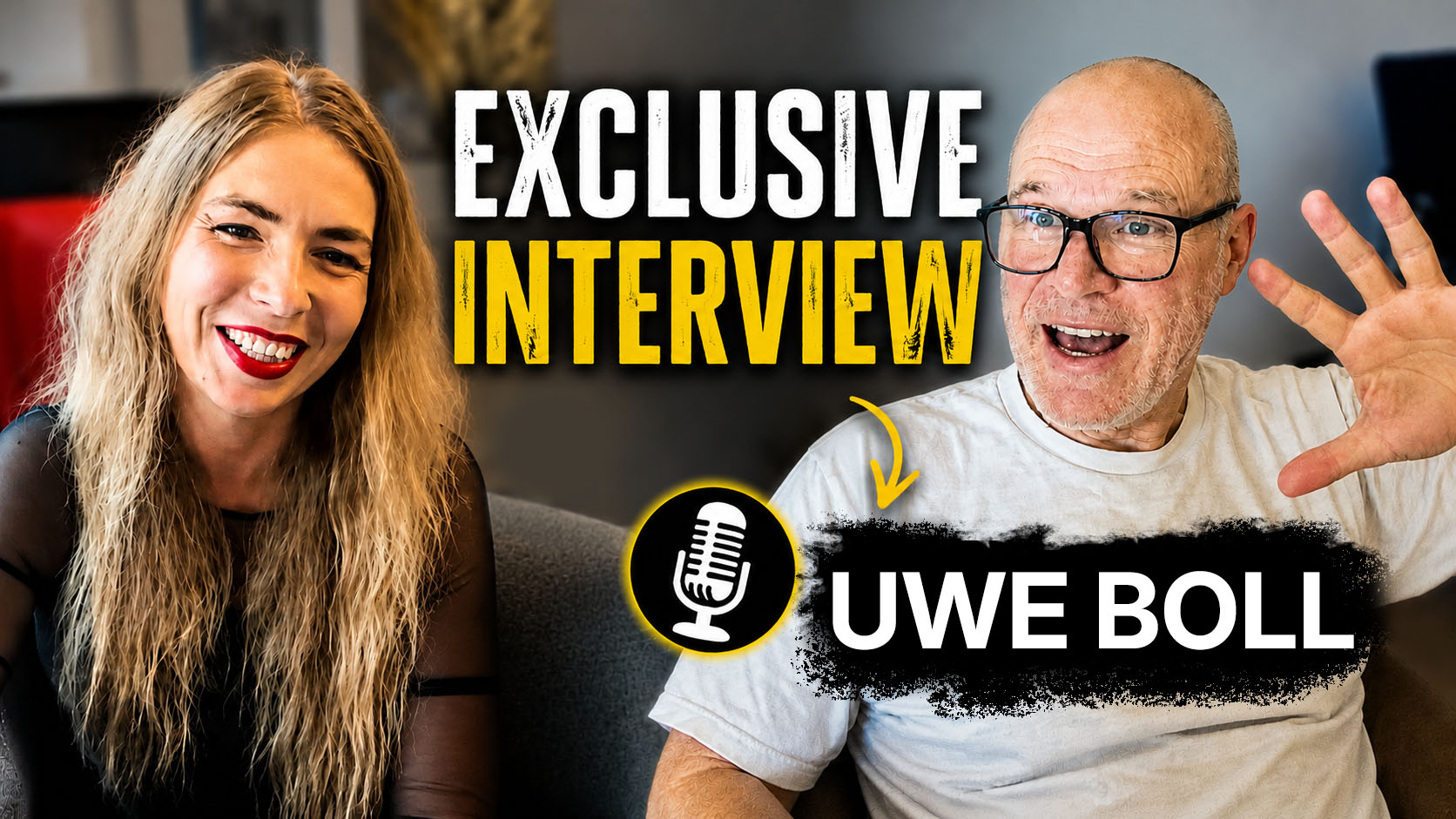
In this in-depth conversation with Diana Ringo on 13.6.2026, Uwe Boll reflects on his latest project, Citizen Vigilante, while also looking back at his long career in filmmaking. Known for provocative genre work that blends action storytelling with political themes, Boll discusses how his approach to cinema has evolved across decades of independent and studio productions, and why he continues to prioritize boundary-pushing narratives over conventional industry expectations.
The discussion also revisits some of his most famous films, including Rampage, Postal, and other cult favorites such as House of the Dead and First Shift. Alongside reflections on his filmography, Boll addresses broader questions about the state of modern cinema, independent filmmaking, and how streaming platforms and industry structures are shaping what kinds of stories get made today.
Diana: Hello! Nice to see you!
Diana: So, you’re now in Germany, yes?
Uwe: Yes. We were in Vancouver until 2020, and then we moved to Germany.
Diana: Ah, so you live in Germany now. That’s interesting. That’s great. But why did you decide to move back to Germany?
Uwe: There were two things. I had my restaurant in Vancouver, and then COVID came. We had to close the restaurant, and the original purpose of being in Vancouver was not really there anymore. I didn’t have to be there.
Most of the movies I had been doing in the last 10 or 12 years were not shot in Vancouver anyway. And I felt that in Europe it’s much easier to be somewhere like Frankfurt, in the middle. It’s so much easier to travel around. You’re an hour away from almost anywhere in Europe.
In Vancouver, you’re very far away from European culture, European food, and all that. I missed that. That was the reason I thought: I had been in Vancouver for seven or eight years, and we were only visiting Germany from time to time for holidays. Now I wanted to reverse the situation.
Diana: Oh, that’s great, actually. So you can now shoot more films in Europe. I think that’s wonderful. I’m from Helsinki, but I also lived in Vienna for 15 years.
Uwe: Okay, cool. I mean, Vienna is nice. I’ve been there several times. It has this very grand atmosphere, and the buildings are unbelievable. The old villa style, where many of the museums are, is very impressive.
Diana: Yes. And what about your team? Did you have to move anyone from Canada, or do you have a German team with you for your movies?
Uwe: No, in Germany I have my cameraman, Matthias Neumann, who I’ve done all my movies with. He has four or five people in his camera crew.
I brought them to New York for First Shift. I brought them to Croatia for Citizen Vigilante and Run. These guys come with me wherever I go.
But the rest of the crew is always changing. I use local crews wherever I work — whether it’s Croatia, New York, Vancouver, or somewhere else. They’re local crews, basically.
Diana: So I also want to congratulate you on your upcoming film Citizen Vigilante! I really want to watch the movie — I’m looking forward to it. Can you tell me a little bit about the plot and what it was like making the movie?
Uwe: Yeah, I mean, Citizen Vigilante is a very gritty thriller. It puts crimes involving migrants in the middle of the story — including mass rapes and other crimes — as part of the thriller.
For me, it’s typical of the kind of films I make, like The Fourth Wall Street and Heart of America. I do a lot of action-genre movies, but with a real political background and a certain message.
I made the German film Hanau about the shooting near Frankfurt where a man killed 14 people. Then I made Run with Amanda Plummer, James Russo, and Barkhad Abdi. That one takes place in Italy and is about boat migrants arriving, and a small town getting out of control.
I don’t know if it’s already available in Finland. I think we sold it in Scandinavia, so it should be somewhere in Finland, Sweden, or Norway.
Then I made what is probably the hardest of these films: Citizen Vigilante.
It’s very much driven by the lead actor, so I looked around and saw Armie Hammer. He had been canceled, but he wanted to come back, and he’s a great actor. He’s a real leading actor. He could play James Bond in a heartbeat.
So I contacted him, and I was lucky because he was in a difficult situation. For me, it wasn’t hard to say: “Look, I’ll hire you. I’ll bring you back with this movie.”
He jumped on it. When he came to Croatia, he was motivated, but he was also extremely prepared because he knew the movie depended on him. It was important for his return as a leading actor.
I discussed with him the harshness of the film regarding migration issues in Europe. Americans are not as sensitive about these topics. In Europe, especially Germany, I couldn’t get the movie through censorship. They said: “You cannot show this movie in Germany.”
There is a lot of self-censorship. When you bring up certain facts, they don’t want to hear them.
That’s why the film is coming out first in the US and Canada. That happens often, but they had no problem with the movie. They said: “Why?”
And to be honest, the movie is not against migration. It’s against criminals. It’s against drug dealers, school bullies in one scene, and people who try to harm women in another scene.
It’s not only about one specific crime. But those things also happen, and that’s the point where the main character feels that these people are not punished.
They don’t even go to jail or get removed from the country. We have cases like this, especially in Germany, where people commit serious crimes and don’t receive proper punishment.
And I’m furious about that. Traditionally, I’m not a right-wing person at all, but when something goes completely wrong, I point it out.
As a filmmaker, I feel that my movies have always done this. If you look at Rampage, they are often against the right, against the rich, against the powerful.
But with this topic, I feel something has gone wrong with migration into Europe, and that we need to change direction.
So the movie is a warning in that sense. But it’s also a vigilante action movie — like The Equalizer or John Wick. Many people will simply watch it because they want to see an action movie.
Diana: Yes, and I watched Rampage and Postal, and I think they are wonderful movies. They are very different. Rampage is more like a Haneke-style, cynical, dark movie, while Postal is a big comedy. But both are very politically strong. I think it’s very unfair how you were treated because of Postal.
Uwe: Yeah, I mean, Postal was fun. If you have a sense of humor, you love Postal, but it’s offensive. It’s this kind of movie where I say: “I don’t accept self-censorship.”
I don’t accept the idea that you cannot do something because it’s against a race, religion, country, or whatever. As a filmmaker, especially in comedy, you have to be able to make jokes about everything.
Who decides what you can or cannot joke about?
A movie like Postal would never be made today. If you brought that script to anyone in the last five or six years, they would tell you there’s no way they would make it.
Even the actors we had in Postal — very famous actors like J.K. Simmons, Seymour Cassel, and David Foley — probably wouldn’t do it again. Their agents would say: “No, you cannot do this movie.”
And I feel it’s part of a decline in the overall quality of movies in the last 10 years. Everything is becoming the same, and nothing is really edgy anymore.
Diana: Yes, I agree. For example, when I watched Deadpool, I felt it was trying to be funny and over-the-top, but it didn’t really have a political edge. It felt meaningless. Your films have a very sharp political edge.
Uwe: Yes, and that’s something I’m proud of — that I made all these movies.
It was interesting with Citizen Vigilante. I had a podcast with two guys. One said: “That’s the movie I’ve been waiting for. It’s the most important movie I’ve watched in years.”
The other guy said: “I’m a Nazi, I’m racist, and I should never be allowed to make a movie again.”
That’s the clash. But maybe that’s a good thing if a movie can create that reaction.
If people become emotional and say: “That’s ridiculous,” or “I can’t believe this,” then the movie is doing something.
The old movies were like that. Think about Apocalypse Now, A Clockwork Orange, The Shining. They were pushing boundaries.
That’s mostly gone now.
The only movies that still push boundaries are some horror films. They’re not political, but they push things in terms of violence, atmosphere, claustrophobia, and craziness.
But where are the political thrillers? Where is Oliver Stone?
Movies like JFK, Natural Born Killers, and Salvador would probably never be made today. There’s no replacement for those kinds of films.
And I think it’s a direct consequence of streaming companies taking over Hollywood.
They are technology companies. They don’t want to be politically incorrect. They don’t want to take risks, because movies are almost a side effect for them — a way to collect data and create customers.
I had a meeting with Apple two years ago in Los Angeles, and they said they would never do anything that is politically incorrect. Everything had to be completely “woke,” diverse, and so on.
I said: “Then I’m the wrong guy,” because the whole point of my movies is exactly the opposite.
They would never do my kind of films.
I think Amazon and the others are similar. They think they’re edgy if they make another superhero movie or something like Jack Reacher, but they’re not really pushing anything.
Diana: Yes, I also feel that with cinematography. I think it’s worse now than 20 years ago. The lighting is worse, the framing is worse.
When I was a teenager, even normal movies looked like movies. It’s strange because technology is much cheaper now, but movies often look worse.
Even Hollywood films sometimes look very flat.
As a filmmaker, I know you can buy very good lights for a reasonable price. So it’s not only about money. I don’t understand why the standards are getting lower and lower.
Uwe: I agree. It’s strange.
When I made First Shift, the crime film about cops in New York, it could have been a TV series. But I shot it like a real movie. You watch Goodfellas or similar films, and they have a cinematic quality.
It ended up on Paramount+, and they said: “That doesn’t look like our other products.”
I said: “But that’s the point. It looks like a theatrical movie.”
That’s actually what they don’t want anymore.
They want this kind of TV look — very realistic, where it feels like someone is sitting across from you.
For example, the biggest hits on Paramount+ are Taylor Sheridan’s shows, like Yellowstone. They are successful, but they all have a TV look.
They don’t put much effort into camera work and editing. The acting can be great, the scripts can be good, but visually it’s often standard television language.
You do a nice two-shot, then a close-up, cover the dialogue, and move on.
That’s how many shows are made now.
Tulsa King with Sylvester Stallone is similar. Good acting, sometimes good writing, but the storytelling style is very safe.
Diana: That’s interesting because I didn’t realize so much that these are specific instructions coming from the people in charge.
I’m outside that system. I’ve never been to America, so I didn’t understand why movies are made this way. But if there are specific instructions, maybe they don’t want movies to stand out too much.
Uwe: Yes, and Netflix is similar. They have exact delivery requirements for how productions have to look, whether it’s a documentary or a feature film.
A lot of Netflix productions look cheap because they produce much more than everyone else.
I agree with you, but I think the deeper issue is that the people making decisions now don’t love movies.
That’s the difference.
In the old system, you had producers like Bob Evans and people who really loved cinema. They didn’t do it only for money.
That disappeared.
I think the only people who still seem to care about movies are a few studio executives who still take some risks.
When you look at Warner Bros. or producers like Amy Pascal, sometimes they still make choices that are a little different — films that are not completely safe.
The others are harder to understand. Who at Amazon decides what movies get made? I don’t even know.
At Netflix, you can say Ted Sarandos, but he’s not personally deciding every movie.
There are hundreds of people making those decisions, and they’re mostly invisible.
I think a lot of scripts first go through algorithms or automated systems. Then you get a report saying: “Too risky,” “too offensive,” “not commercial enough,” and that’s it.
The movie is already dead.
Diana: Are you filming something new now, or preparing for a new movie?
Uwe: Yeah, I have two projects. I have Rampage 4 in development.
I talked to Brendan Fletcher and said: “Look, it’s more important than ever to continue Rampage in today’s world, because things have really gotten out of control.”
A lot of things I predicted in Rampage happened later. In Rampage 3, the White House gets attacked, there’s civil war, and all this stuff. And now, eight years later, we are much closer to that kind of situation, where inside Western countries there are revolutionary tensions building up.
So I want to continue that.
Then I thought about doing a new version of House of the Dead, 23 years later, with the same cast coming back.
We want to shoot in Germany in September. It looks good that we can do it.
But I have to remove all connections to the original because I don’t have the rights from Sega anymore. They didn’t want to give them back to me.
So I have to make it as an unofficial movie. But many fans have always wanted that.
It’s funny how House of the Dead became a cult movie. In the beginning, everybody hated it. The worst reviews of my whole career were for House of the Dead.
But it was successful, and I thought: “You know what? If I can bring the old actors back 23 years later, it could be fun.”
It’s almost like a fan film.
Diana: That’s great that you’re always staying busy. It’s very inspiring for me because I’m also a completely independent filmmaker. I don’t have studios, big budgets, or anything like that. I’ve made three feature films myself, and I want to continue making more.
Uwe: Yeah, I mean, that’s the good thing today. If you are completely independent, distribution is easier because you can put your work out there.
You can put it on Prime, Google Play, YouTube, and other platforms.
When I was young, if you didn’t get a deal, there was no distribution at all. Nobody would see your movie. You were completely stuck.
Now there is more freedom because you can release digitally yourself.
Diana: Which filmmakers inspired you the most in your career?
Uwe: Based on my generation, of course Oliver Stone, Martin Scorsese, and Stanley Kubrick.
But also older filmmakers like William Wyler and John Ford.
It’s not that I love every movie they made, but that was the time when I went to the cinema two or three times a week.
Sergio Leone’s Once Upon a Time in the West, Goodfellas, The Godfather, Apocalypse Now — these movies from the ’70s, ’80s, ’90s, and early 2000s were an incredible period.
I think it was maybe the best time for movies.
You had everything from Taxi Driver to The French Connection. You had Don Siegel, Sam Peckinpah — so many influential filmmakers.
I loved Jaws by Steven Spielberg. It’s probably my favorite Spielberg movie.
Those films were the reason I wanted to make movies. There were so many incredible talents at the same time.
Think about John Carpenter, David Cronenberg, David Lynch — you had 15 or 20 absolute icons directing films at the same time.
That doesn’t happen anymore.
Diana: What advice would you give to beginner filmmakers who are starting out?
Uwe: The good thing now is that when I started, you had to shoot on Super 8 or 16mm, and it always cost money.
Today you can shoot even with your phone. It costs almost nothing.
That is a huge difference.
Now it’s much easier to film something, produce something, and put it out there. You can make short films and share them on TikTok, Instagram, YouTube, or wherever.
You can build an audience.
My advice to beginner filmmakers is: try everything.
Try making something funny, something serious, something experimental.
And surround yourself with talented people — not only your friends.
I see many beginner filmmakers contacting me and saying: “Can you watch my film?”
And often the filmmaker is not bad. The problem is that they use their friends as actors, and their friends cannot act.
You destroy your own talent if you don’t have talented people working with you.
Social media actually gives you the chance to find people online who fit your project.
Another thing: don’t upload everything you make if you want a reputation as a filmmaker.
Some people shoot something, finish it, and immediately put it on YouTube — even if it’s mediocre.
That is not good advertising for yourself.
It’s better to only show work where you think: “I’m really happy with this.”
Diana: Thank you very much, Uwe. It was a wonderful talk. I wish you great luck with the premiere and lots of success!
Uwe: Thanks so much.

