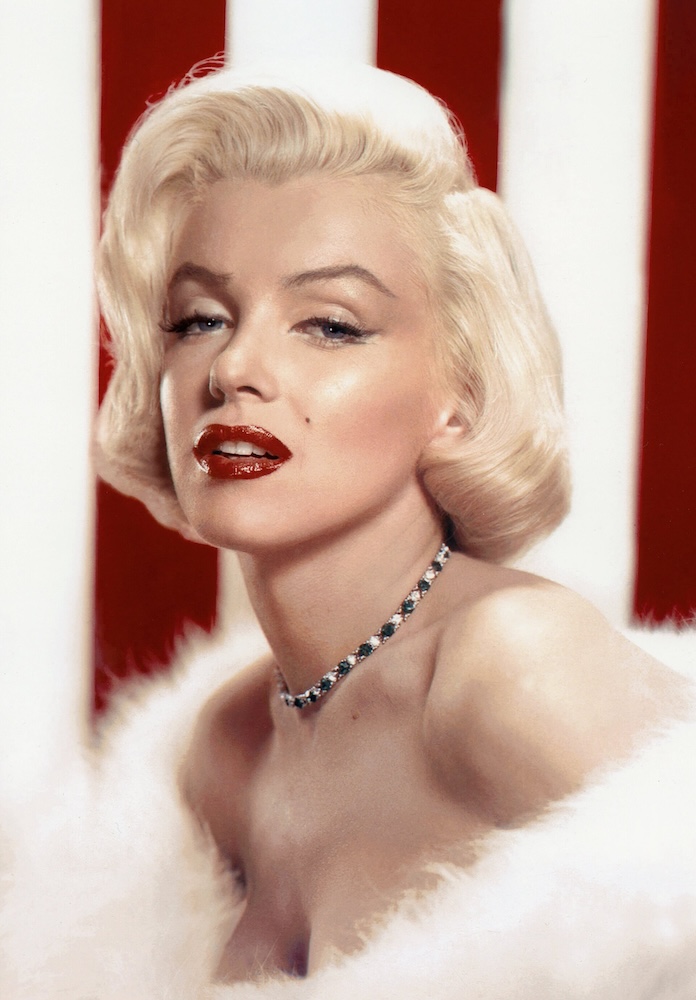
On June 1, 2026, Marilyn Monroe would have turned one hundred. Few figures in the history of cinema have remained as recognizable, fascinating, and endlessly discussed as the woman born Norma Jeane Baker in Los Angeles in 1926. She lived for only thirty-six years, yet the image she created has survived for generations.
Marilyn Monroe is often remembered first as the ultimate Hollywood blonde: glamorous, sensual, playful, and irresistibly beautiful. But this familiar image tells only part of her story. What made Marilyn so extraordinary was the unusual combination of qualities she brought to the screen. There was something almost childlike in her charm — a softness, vulnerability, and innocence — combined with an unmistakably sensual presence. Her femininity was seductive without being vulgar. There was tenderness in her sexuality, and that combination made her uniquely captivating.
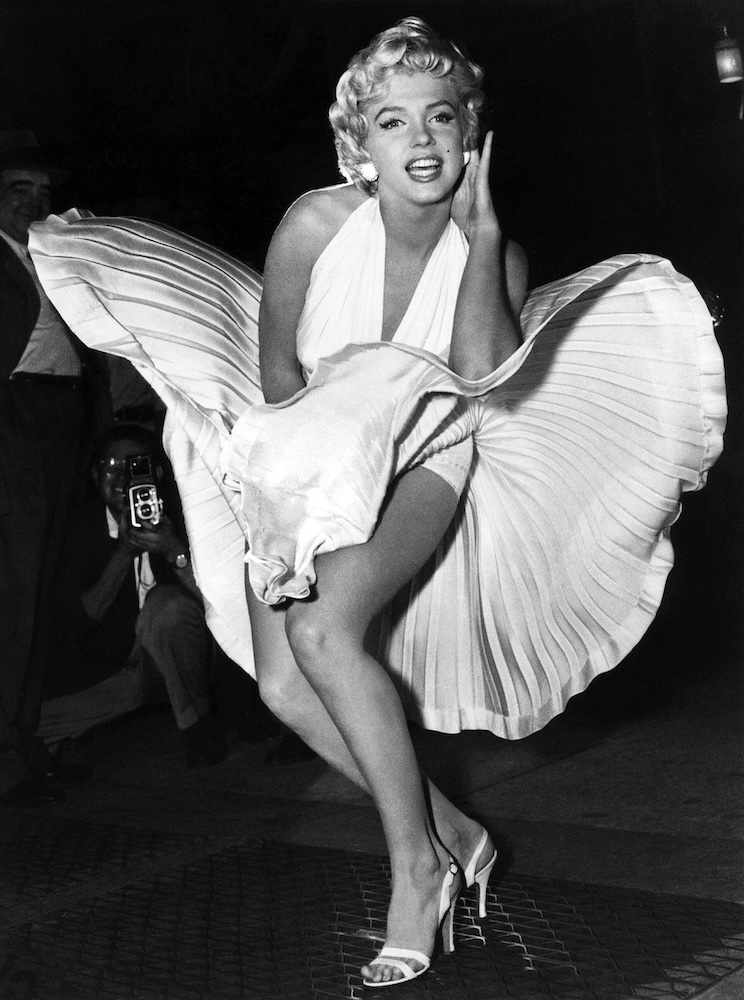
Yet Marilyn was much more than a beautiful woman in front of a camera. She could sing, dance, perform comedy, and act dramatically. Her musical performances demonstrated genuine talent, while her comic timing was remarkable. In Gentlemen Prefer Blondes, she transformed Lorelei Lee, apparently a stereotypical “dumb blonde,” into a witty and memorable character. Her performance of “Diamonds Are a Girl’s Best Friend” became one of the defining moments of classic Hollywood.
Marilyn also wanted to be taken seriously as an actress. She studied acting, worked with respected teachers, and deliberately tried to move beyond the roles Hollywood had created for her. Her performances in Bus Stop and The Misfits revealed a much more vulnerable and dramatic side of her talent, while Some Like It Hot demonstrated her extraordinary gift for comedy.
In 1956, she went even further by establishing Marilyn Monroe Productions. At a time when Hollywood studios exercised enormous control over actors, this was a remarkably independent step for a female star. Marilyn was trying to become not merely the object of the camera, but the author of her own career.
There was another side to her personality that is often overlooked. Marilyn loved books and literature and sought the company of intelligent and creative people. She was interested in writers, artists, and intellectuals. She knew people such as Tennessee Williams, and her marriage to the playwright Arthur Miller also brought her into a very different cultural world from that of Hollywood.
This is why reducing Marilyn Monroe to a “sex symbol” does such an injustice to her. She was a highly professional performer who worked intensely on her craft. She possessed musical ability, comic timing, physical expressiveness, and genuine dramatic sensitivity. Behind the apparently effortless image was a woman who was constantly learning and trying to define herself.
Her private life, however, remained under enormous public scrutiny. Her marriages, friendships, and relationships became subjects of constant speculation, while the gap between the public Marilyn and the private Norma Jeane became increasingly difficult to escape.
Her life ended abruptly in August 1962, when she was only thirty-six. The official explanation was an overdose of barbiturates, and her death was classified as a probable suicide. But from the very beginning, her death generated numerous rumors, theories, and unanswered questions.
For me, it is impossible to look at the story of Marilyn Monroe simply as that of a fragile woman who was unable to cope with life. That interpretation seems profoundly unfair to the woman she actually was. Marilyn had survived an extraordinarily difficult childhood, built an international career almost from nothing, fought against the Hollywood system, studied acting, and tried to gain control over her own image and professional life.
Her death also became part of the dark atmosphere surrounding America in the 1960s. In the years that followed came the assassinations of President John F. Kennedy in 1963 and Robert F. Kennedy in 1968. A multitude of theories and rumors attempted to connect these tragedies with one another and with the mysterious circumstances surrounding Marilyn’s death. Whether one accepts any particular theory or not, the succession of these extraordinary events created a lasting sense that something remained hidden beneath the official versions of history.
There is another question that continues to intrigue me. Why has Marilyn Monroe sometimes seemed strangely absent from the official cultural narrative, despite being perhaps the most recognizable actress in the world?
A hundred years after her birth, one might have expected the centenary of such an extraordinary figure to become a major event throughout the film industry. There have been tributes and retrospectives, but the scale of attention has sometimes seemed surprisingly modest considering her enormous importance to cinema and popular culture.
This raises a disturbing question: why does Marilyn Monroe still occupy such a peculiar place in Hollywood history? Why, despite her extraordinary fame and enduring influence, does the industry sometimes seem reluctant to look too closely at her life — and particularly at the circumstances of her death?
There is a darker possibility, secret services and powerful institutions have historically known how to promote people who are useful to them and, when someone becomes inconvenient, how to surround that person with a curtain of silence and gradually remove them from the public narrative. Perhaps this is only speculation. But when one considers the many unanswered questions surrounding Marilyn’s death, it is difficult not to wonder whether there are still secrets that continue to trouble those who possess power.
Whatever the truth may be, Marilyn Monroe deserves to be remembered for much more than the circumstances of her death. She was not merely a blonde bombshell, nor merely a sex symbol. She was a talented actress, singer, dancer, reader, and ambitious professional who wanted to be taken seriously.
Her extraordinary appeal came from the contradiction she embodied: innocence and sensuality, vulnerability and confidence, childish charm and sophisticated performance. She could appear almost fragile while possessing an extraordinary command of the screen.
A hundred years after her birth, Marilyn Monroe remains not simply a star of the past, but one of the great mysteries and enduring icons of twentieth-century culture.

